Retainers cause excess saliva because your mouth naturally treats any new object, including food, a retainer, or a piece of gum, as something to help move along, and increased saliva production is part of that automatic response. Your salivary glands ramp up output when they sense a foreign object, partly to help protect your gums and teeth and partly as an involuntary swallowing reflex kicks in more often. This response is temporary for the vast majority of people and typically fades within a few days to about two weeks as your mouth adjusts and starts treating the retainer as normal rather than novel.
If you just got a new retainer and suddenly feel like you cannot stop swallowing, you are having a completely normal, if slightly annoying, experience. Let us go through exactly why this happens and what actually helps while you wait it out.
Why your mouth reacts this way
Your mouth is highly sensitive to anything new, and this sensitivity exists for a good biological reason. Saliva helps protect your teeth and soft tissue, aids in breaking down food, and helps clear away anything that should not be there. When a new object like a retainer sits against your palate or teeth for the first time, your nervous system interprets it similarly to detecting food, triggering increased saliva production as a protective and functional response.
This is not a sign that something is wrong with your retainer or with you. It is simply your mouth doing what it is designed to do when it detects a new presence.
The foreign object response explained
Dentists and orthodontists commonly refer to this as part of the general adjustment period that comes with any new oral appliance, whether that is a retainer, an aligner, or even a filling that changes the shape of a tooth slightly. Your brain has to essentially relearn what belongs in your mouth, and until it does, some combination of extra saliva, an urge to swallow more frequently, and occasionally a mild gag reflex are common.
The intensity of this response varies quite a bit between individuals. Some people barely notice it, while others find the first day or two genuinely uncomfortable, though both experiences are within the range of normal.
How long excess saliva typically lasts
Here is a general timeline of what most people experience during the adjustment period.
|
Timeframe |
What's Happening |
Saliva Level |
|
Day 1 to 3 |
Mouth actively detecting the new object as foreign |
Highest, often noticeable throughout the day |
|
Days 4 to 7 |
Brain beginning to adjust to the retainer's presence |
Noticeably reduced compared to the first few days |
|
Week 2 and beyond |
Retainer treated as a normal part of your mouth |
Back to typical baseline for most people |
The takeaway is simple. For the large majority of people, this is a short lived adjustment rather than an ongoing issue, and it resolves on its own without needing any specific treatment.
Factors that can make it better or worse
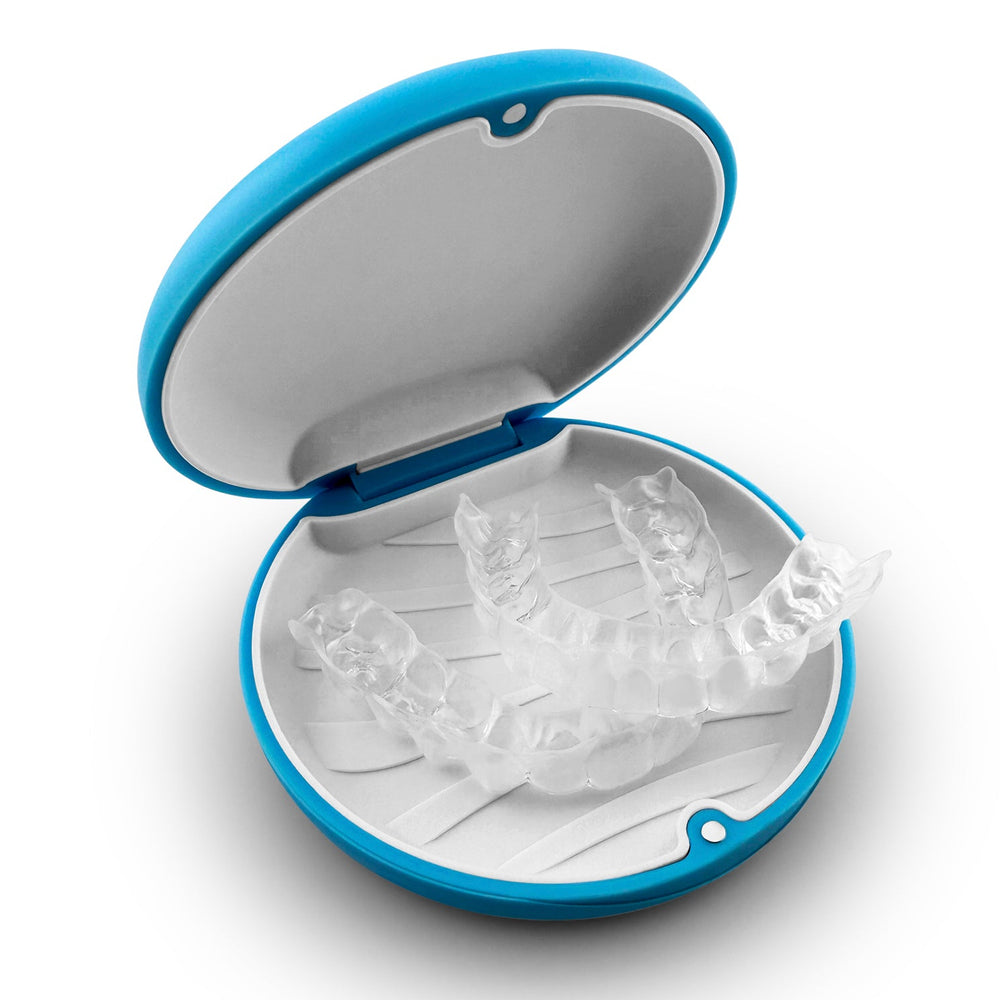
A few things influence how intense and how long this adjustment period feels. Fit quality matters quite a bit, since a retainer that fits precisely tends to feel less foreign than one that is bulky or slightly loose, both of which can prolong that sense of novelty for your mouth. An upper and lower retainer set that is molded specifically to your teeth generally settles in faster than a generic option, since a precise fit gives your mouth less to react to.
How consistently you wear it also plays a role. Wearing your retainer as directed, rather than only occasionally, tends to shorten the adjustment period overall, since your mouth adapts faster with steady exposure rather than starting the process over each time.
If you are still deciding between retainer styles and want to understand how different types feel and fit, our guide on the different types of retainers after braces breaks down the options in more detail.
Tips to manage excess saliva during adjustment
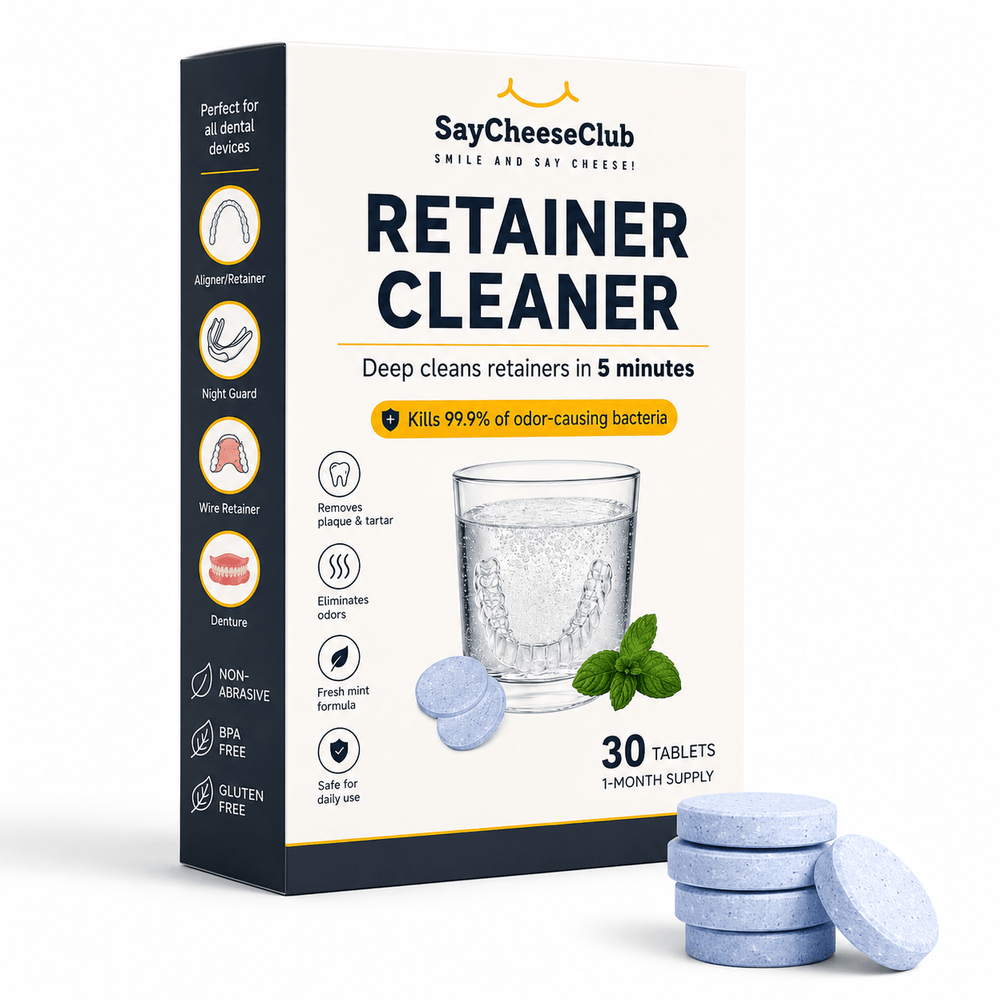
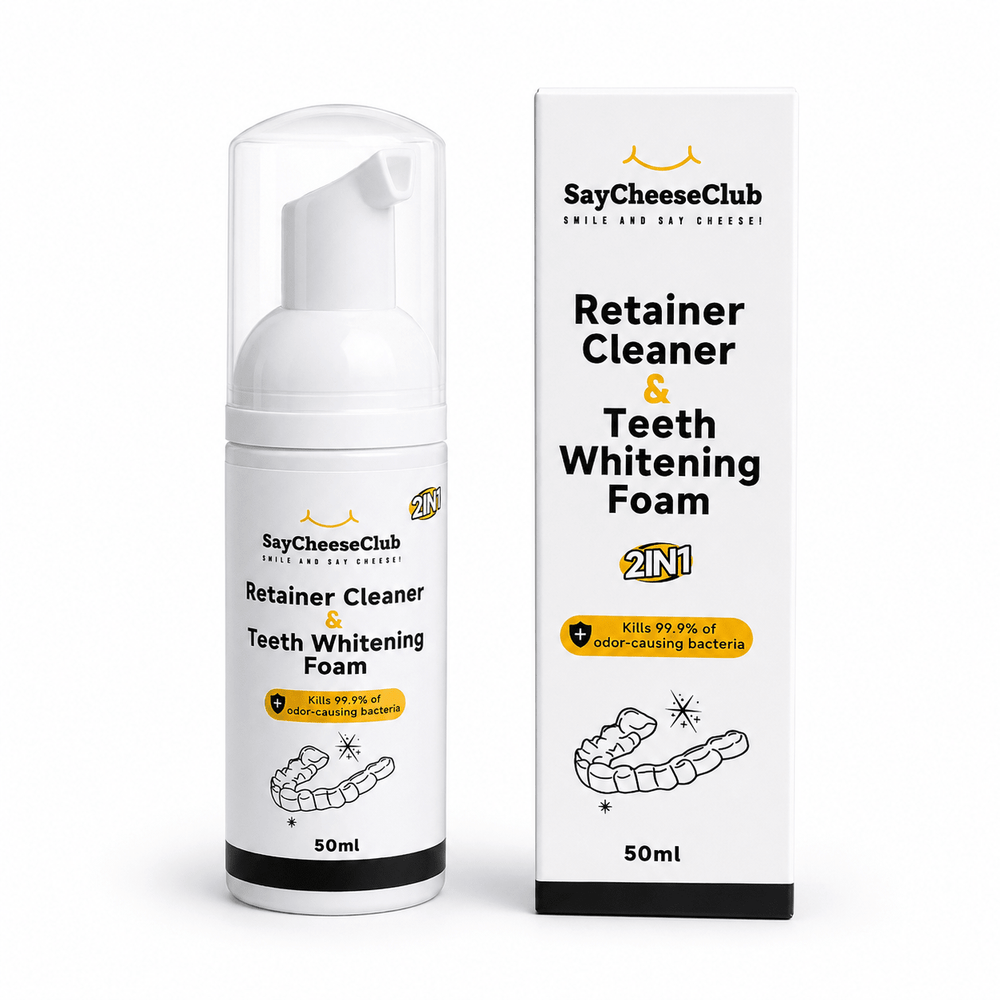
A few simple habits can make the first several days more comfortable. Practicing slow, deliberate swallowing rather than fighting the urge can help you feel more in control rather than overwhelmed by it. Staying well hydrated actually helps too, since dehydration can sometimes make your mouth feel even more sensitive to a new object. Keeping your retainer clean also supports a smoother adjustment, since a fresh, properly cared for retainer is less likely to feel irritating against your gums or palate. Retainer cleaning tablets make it easy to keep your retainer feeling fresh with a simple regular soak.
If your gums or the inside of your cheeks feel irritated from a new retainer rubbing against soft tissue, Orajel Mouth Sore Gel is formulated specifically for irritation caused by orthodontic appliances and can offer some relief while your mouth finishes adjusting.
When to be concerned
Excess saliva from a new retainer should improve steadily, not stay the same or worsen after the first week or two. If it persists well beyond that window, or if you notice other symptoms like significant pain, swelling, or difficulty swallowing, it is worth checking in with your dentist to rule out a fit issue or an unrelated cause. For the vast majority of people, though, this is simply a short, temporary phase of getting used to something new in your mouth.
Comparing this to other new appliance adjustments
If this is not your first experience with an oral appliance, it may help to know that the same adjustment pattern shows up with braces, aligners, and even new dentures. Anyone transitioning between removable and fixed options, or starting with any appliance for the first time, tends to go through a similar short window of extra saliva and heightened awareness before their mouth settles in. Recognizing this as a predictable, well documented pattern rather than something unusual to your situation can make the first few days feel a lot less concerning.
It is also worth noting that switching retainer styles, say from a wire retainer to a clear one, can sometimes bring back a milder version of this response, even if you have worn a retainer before. Your mouth is reacting to the specific new shape and material, not retainers in general, so a bit of readjustment is normal any time you change to something different.
Retainer Saliva FAQs
Is it normal for a new retainer to cause extra saliva?
Yes, this is a very common and temporary response to wearing any new oral appliance for the first time. Most people notice it improving within a few days and returning to normal within about two weeks.
How long does excess saliva from a retainer usually last?
For most people, it is most noticeable in the first two to three days and largely resolves within one to two weeks as the mouth adjusts to the retainer's presence.
Does a better fitting retainer reduce excess saliva?
Generally yes. A retainer molded precisely to your teeth tends to feel less foreign to your mouth than a bulky or loose fitting one, which can help shorten the adjustment period.
Should I stop wearing my retainer if it causes too much saliva?
No, consistent wear actually helps your mouth adjust faster. Stopping and restarting tends to prolong the adjustment period rather than resolve it, so it is best to stick with regular wear unless you are experiencing pain or other concerning symptoms.
The bottom line
Excess saliva after getting a new retainer is a normal, temporary response as your mouth adjusts to something new, not a sign of a problem. For most people, it fades noticeably within the first week and is essentially gone within two weeks. A precise fit, consistent wear, and good retainer hygiene all help that adjustment go as smoothly as possible.
Ready for a retainer that fits comfortably from the start? A precise, custom molded fit helps your mouth adjust faster and more comfortably. Order your upper and lower retainer set today from SayCheeseClub and get a comfortable fit for both arches.