Yes, teeth whitening foam really works, but with an important caveat. It uses peroxide, the same active whitening ingredient found in strips, gels, and professional treatments, so it does genuinely lighten surface stains over time. The catch is that most foam formulas use a lower peroxide concentration than strips or in office treatments, which means results are real but gradual, better suited for maintaining a bright smile than delivering a dramatic overnight transformation.
Now let us actually unpack that, because a one line answer does not tell you whether it is worth adding to your routine. You have probably seen whitening foam all over your feed lately, with people pumping it onto a toothbrush and promising a noticeably whiter smile in days. It is a fair question to ask whether that is genuine or just good marketing, so let us look at what is actually happening chemically, what real results look like, and where foam falls short compared to other whitening formats.
The short, honest verdict
Whitening foam works the way it claims to, through a peroxide based chemical reaction that breaks down staining compounds in your enamel. What it will not do is replicate the dramatic, fast results of a professional treatment or a high concentration strip. If your expectations match what foam is actually built for, gentle, gradual, low effort brightening, it delivers. If you are expecting a dramatic transformation in a few days, you will likely be disappointed and should look at a stronger option instead.
Why it actually works, chemically speaking
The whitening effect in foam comes from peroxide, usually hydrogen peroxide, acting as an oxidizing agent. When it contacts your enamel, it breaks down into water and oxygen, and those oxygen molecules work their way into the outer layer of your tooth to break apart the compounds responsible for staining and discoloration. This is not unique to foam, it is the same basic mechanism behind strips, gels, and professional whitening treatments. What changes between formats is concentration and contact time, not the underlying chemistry.
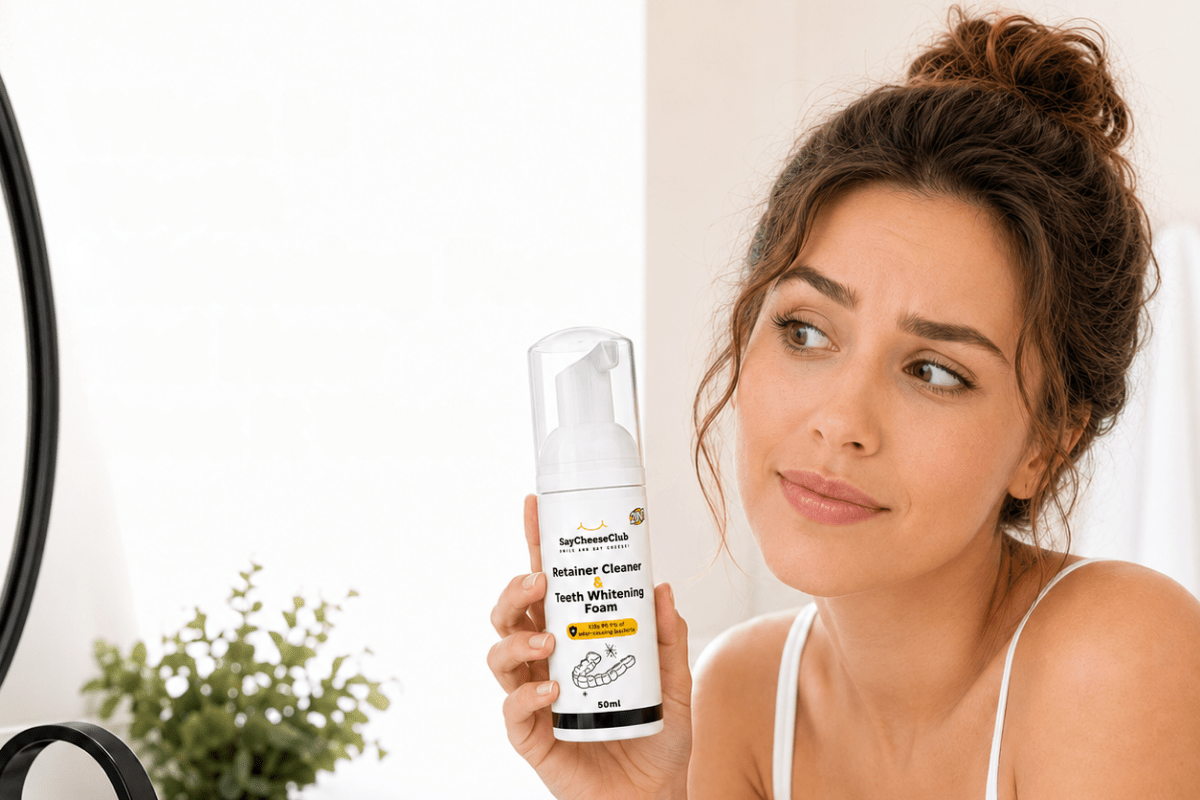
Foam formulas are built with a lighter, airy texture specifically so the product spreads thinly and evenly across your teeth, including into small gaps a flat strip cannot reach. Because there is less filler and thickener needed to hold the formula together, a higher percentage of what you are applying is actually active ingredient rather than product just sitting there doing nothing. If you want to see a formula built specifically around this idea, SayCheeseClub's retainer cleaner and teeth whitening foam combine that whitening action with retainer cleaning in the same daily step.
What real results actually look like
This is where most of the skepticism around whitening foam comes from, and honestly, it is fair skepticism if expectations are not set correctly. Foam is not designed to erase a decade of coffee and wine staining in a week. What it is designed to do is gradually lighten surface stains and help maintain results from a previous whitening treatment, with visible improvement typically building over one to two weeks of consistent daily use rather than appearing after a single application.
People who see the best results tend to be those with mild to moderate surface staining who use the product consistently as part of their daily routine, rather than occasionally or inconsistently. If you already whitened your teeth through a stronger method and want to protect that investment without going back to trays or strips every few months, foam genuinely earns its place here. SayCheeseClub's whitening foam was built with exactly that maintenance role in mind, especially for people who are already using a retainer cleaner as part of their nightly habit anyway.
Where foam falls short
To be fully honest about the limits, foam is not the right tool for deep, years old discoloration, and it is not going to match a strip or a professional treatment for speed. Strips hold a much higher concentration of peroxide directly against your teeth for an extended session, often thirty minutes or more, giving the active ingredient far more contact time to work. Colgate, one of the most established names in US oral care, notes that its own Optic White whitening toothpaste is formulated to visibly reduce stains within one to two weeks of twice daily brushing, which is a similar timeline to foam but through a different delivery method entirely, underscoring that gradual, consistent use is the common thread across most at home whitening formats, not just foam specifically.
If your goal is a dramatic before and after result for a big event, foam is genuinely the wrong tool for that specific job. If your goal is steady, low effort brightening you can fold into a routine you are already doing anyway, it holds up.
How to actually get real results from it
Consistency is the entire game here. Skipping days or using it sporadically is the single biggest reason people conclude foam does not work when the actual issue is the routine, not the product. Apply it to a toothbrush daily, brush for the full recommended time, and avoid rinsing immediately afterward so the active ingredient has a chance to actually work rather than getting washed away. Most formulas also ask you to avoid food and drink for a short window after use, and skipping that step is another common reason results end up underwhelming.
Pairing it with a full routine rather than treating it as a standalone fix also matters. Since it does not require an extra tray, whitening foam fits naturally alongside a retainer or night guard habit you already have, which is part of why SayCheeseClub's retainer cleaner and teeth whitening foam was built to handle both in the same bottle instead of asking you to manage separate products for each step.
So does it actually work
Yes, with realistic expectations attached. It uses real, proven whitening chemistry, it is genuinely effective for mild to moderate staining and maintenance, and it is a low effort way to build whitening into a routine you will actually stick with. It is not a substitute for professional treatment if you need dramatic correction, but that was never really its job in the first place.
People also ask
Does teeth whitening foam actually whiten teeth or is it just marketing
It genuinely whitens teeth through peroxide based oxidation, the same core chemistry used in strips and professional treatments. Results are real but gradual rather than dramatic, which is why it sometimes gets mistaken for a marketing gimmick when expectations are set too high.
How long does it take to see results from whitening foam
Most people notice a subtle improvement within one to two weeks of consistent daily use, with more visible results building over several weeks. It is a gradual process rather than an instant transformation.
Is whitening foam as effective as whitening strips
Not in terms of speed or intensity. Strips use a higher peroxide concentration held against teeth for a longer session, so they typically deliver faster, more dramatic results, while foam is better suited for gentle daily maintenance.
Why does whitening foam not seem to work for some people
The most common reason is inconsistent use. Whitening foam depends on daily, repeated application to build results over time, so skipping days or stopping early is usually why someone does not see the results they expected.
Is whitening foam safe to use every day
Yes, most whitening foams are specifically formulated for daily use, typically at a gentler peroxide concentration than stronger treatments meant for limited use, which makes daily application both safe and necessary for real results.
Can whitening foam remove deep, old stains
Not effectively on its own. Foam is best suited for surface level staining and maintaining results from a stronger treatment. Deep, years old discoloration typically requires a higher concentration gel, strip, or professional treatment first.
Shop Retainer Cleaner and Teeth Whitening Foam Now