Teeth whitening foam is a peroxide based whitening product with a light, airy texture that you brush onto your teeth like toothpaste instead of using a strip or a tray. It works by releasing oxygen molecules that break down the compounds responsible for staining inside tooth enamel, gradually lightening the visible color of your teeth with consistent daily use.
Now here is what that actually looks like in real life. You have probably seen it by now, a little bottle or pump that promises a whiter smile without strips, without trays, and without the sticky mess that usually comes with whitening products. You pump out some foam, brush it on, and go about your morning. It looks almost too simple to actually do anything, which is probably why you are here trying to figure out if it is legitimate or just another oral care trend that looks good on camera and does very little in real life.
Good news, there is real chemistry behind it, and once you understand how it actually works, you will know exactly when it makes sense to use, what it can realistically do for your teeth, and where its limits are compared to other whitening formats.
At actually is teeth whitening foam
At its core, teeth whitening foam is a whitening product built around the same active ingredient found in most whitening treatments, which is peroxide, usually hydrogen peroxide in lower, over the counter strength formulas. What makes it different is not the ingredient, it is the delivery format. Instead of a thick gel packed into a tray or a sticky strip you press onto your teeth, the whitening agent is suspended inside a light, airy foam that you apply with a toothbrush, much like you would apply toothpaste.
That foam texture is not just a gimmick. Air bubbles inside the formula help the product spread thinly and evenly across the surface of your teeth, including into small gaps and the spaces between teeth that a flat strip simply cannot reach. Because there is less thickener and filler needed to hold the product together, more of the actual active ingredient stays available to do its job, rather than getting trapped inside a dense gel.
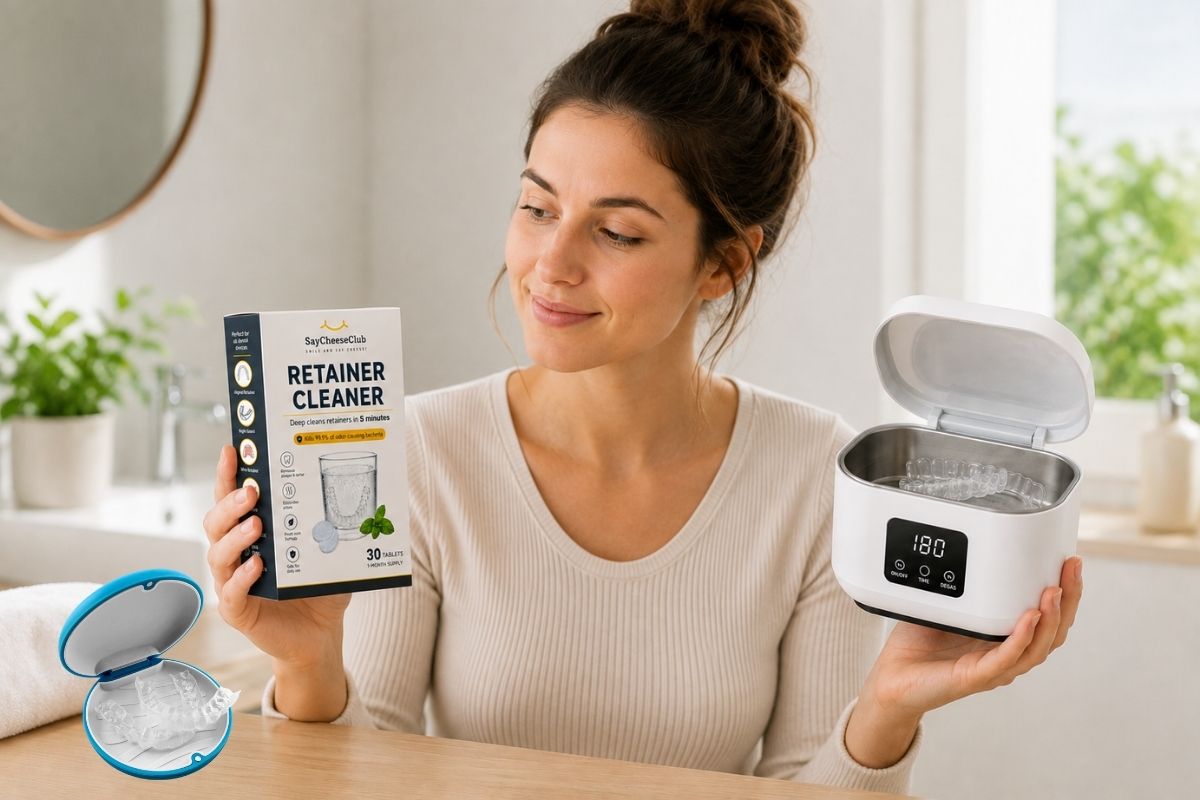
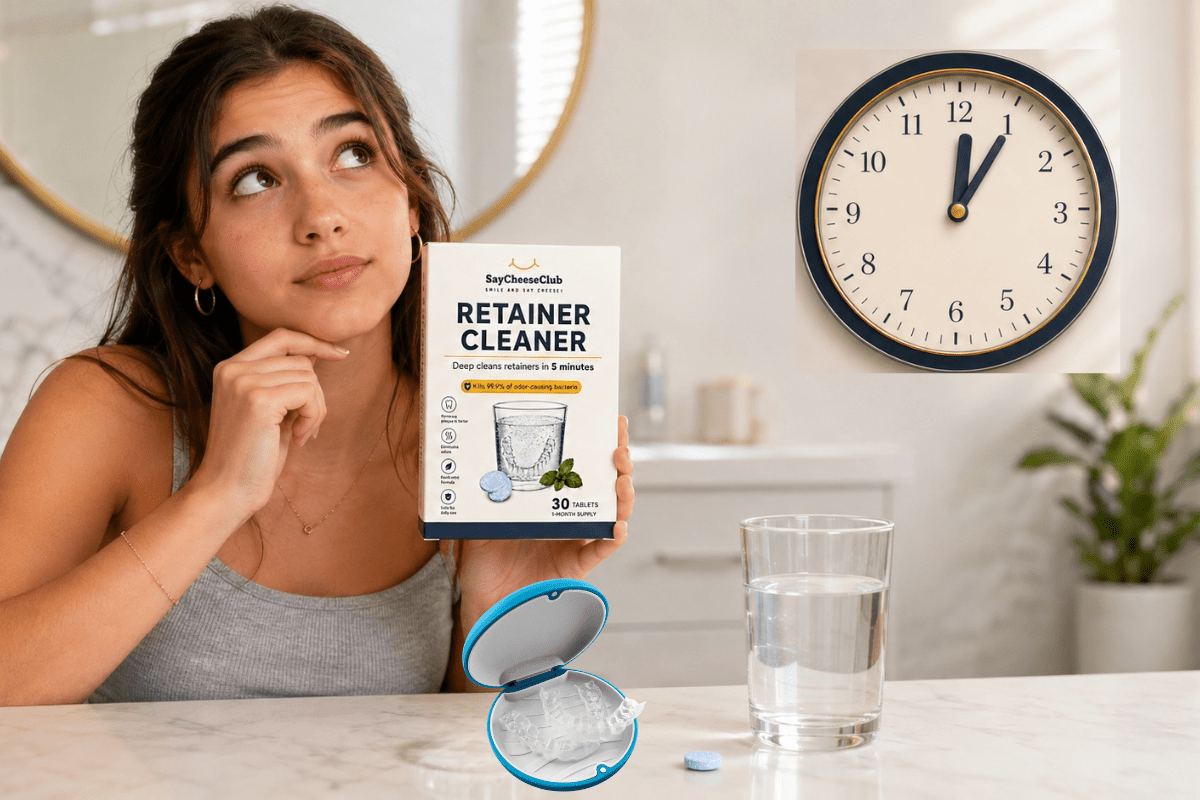
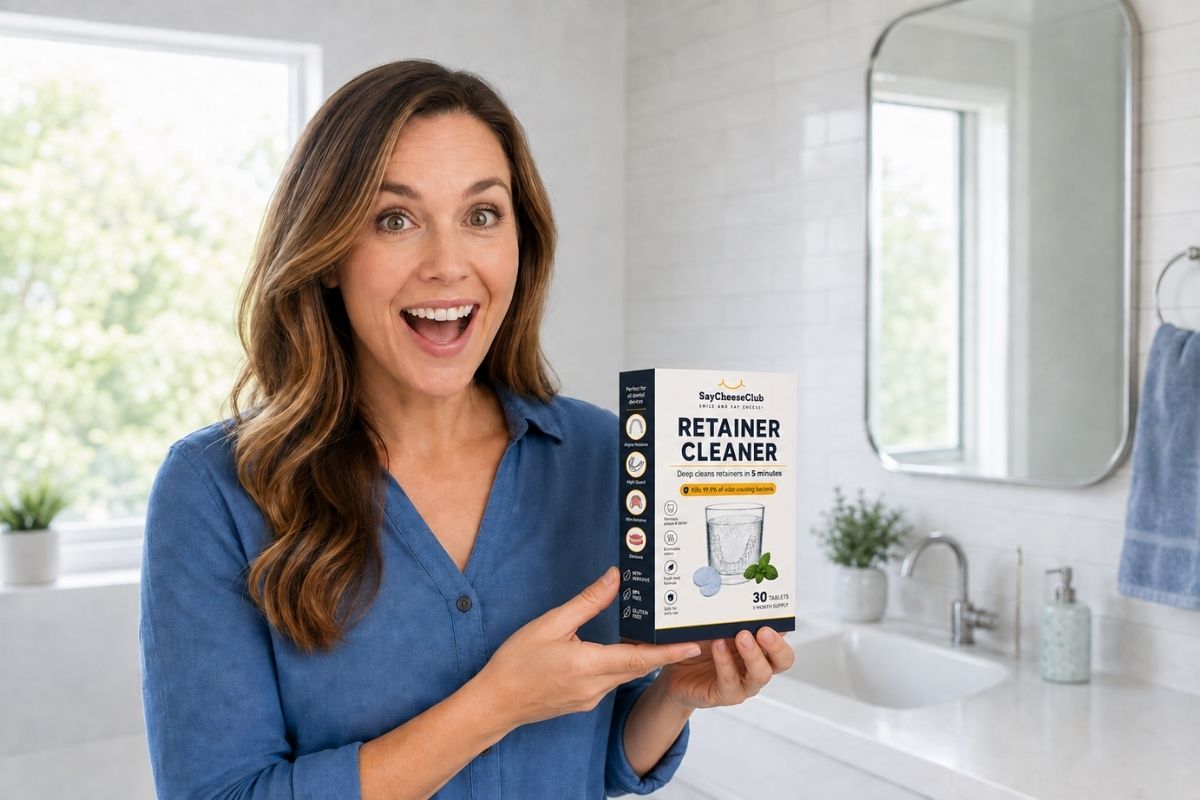
If you want to see what a full routine looks like in one product, SayCheeseClub's retainer cleaner and teeth whitening foam combine both into a single step, which is worth knowing about before you start piecing together separate products for each part of your routine.
How the whitening actually happens
Here is the part that explains why this works at all. Peroxide is what is called an oxidizing agent, meaning it breaks down into water and oxygen once it comes into contact with your teeth. As that reaction happens, the oxygen molecules work their way into the outer layer of your enamel and target the compounds responsible for staining and discoloration, essentially breaking them apart at a molecular level so they no longer reflect light the way stained enamel does. The result, over repeated use, is enamel that looks visibly brighter.
Foam formulas typically use a milder concentration of peroxide compared to professional strength gels used in dental offices, which is part of why foam tends to be gentler on sensitive teeth. It also means the results build gradually with consistent use rather than showing up dramatically after a single application, so this is a maintenance tool more than an instant transformation.
Why the foam texture actually matters
A lot of people assume foam is just a marketing choice, but the texture genuinely changes how the product performs. Because foam has lower surface tension than a thick gel, it spreads into tiny grooves and between teeth more easily, covering more total surface area with less product. That also means less of the whitening agent gets wasted sitting in a thick layer that never actually touches enamel, which is a real limitation with some gel based treatments.
The tradeoff is contact time. A whitening tray or strip physically holds the product against your teeth for a set period, while foam is typically brushed on and rinsed off more quickly as part of your regular routine. That shorter contact time is exactly why foam tends to work best as a consistent daily habit rather than an occasional deep treatment.
How to actually use it correctly
Most whitening foams are designed to be used in place of, or alongside, your normal toothbrushing routine. You apply a small amount to a dry or damp toothbrush, brush your teeth as you normally would for about one to two minutes, and then spit without rinsing right away so the active ingredient has a little extra time to work before your saliva washes it away. Skipping food, drinks, or rinsing for a short window afterward, usually listed clearly on the packaging, helps the product actually finish doing its job instead of getting diluted immediately.
Consistency matters more than intensity here. Using it daily as part of your regular oral care routine will get you noticeably better results than using it aggressively for a few days and then forgetting about it for a month. If you are looking for a version built specifically to pair with the rest of a retainer routine, SayCheeseClub's whitening foam is formulated to fit into a daily habit rather than a once in a while treatment.
Foam versus strips versus gel, honestly
Strips tend to deliver stronger, more visible results faster because they hold a higher concentration of peroxide directly against your teeth for an extended period, sometimes thirty minutes or more per session. According to Crest, the maker of one of the most recognized whitening strip products in the US, their 3D Whitestrips are designed for that kind of dedicated, higher intensity treatment window, which is a very different use case than a foam you brush on in under two minutes.
Gel trays sit somewhere in the middle, offering strong results with more contact time than foam but requiring a physical tray, which some people find inconvenient for daily use. Foam wins on convenience and ease of building a habit, which for a lot of people matters more than raw whitening power, especially for maintenance rather than dramatic correction of years of staining.
Who foam actually makes sense for
If your teeth have mild to moderate surface staining from coffee, tea, or everyday wear, and you mainly want to prevent new staining while gently brightening over time, foam is a genuinely reasonable choice. If you are dealing with deep, years old discoloration and want a dramatic before and after result, you will likely need a stronger gel or strip based treatment to get there, and foam works better afterward as the maintenance step that protects those results.
People who already wear a retainer or night guard often appreciate foam specifically because it does not require an extra tray competing for space in their routine. SayCheeseClub's retainer cleaner and teeth whitening foam was built with exactly that overlap in mind, since it handles two habits in one bottle instead of asking you to juggle separate products.
People also ask
Is teeth whitening foam actually effective
Yes, for mild to moderate surface staining. It works through the same peroxide based oxidation process as other whitening products, though typically at a gentler concentration, so results build gradually with consistent daily use rather than appearing after one application.
Is whitening foam safe for sensitive teeth
Generally yes, since most foam formulas use a lower peroxide concentration than strips or professional gels, which tends to make them gentler on sensitive enamel. If you have significant sensitivity, it is still worth checking with your dentist before starting any whitening routine.
How long does it take to see results from whitening foam
Most people notice a subtle difference within one to two weeks of consistent daily use, with more visible results building over several weeks. This is a slower, more gradual process compared to strips or professional treatments.
Can I use whitening foam every day
Yes, most whitening foams are specifically designed for daily use as part of your regular brushing routine, unlike stronger treatments that are typically used for a limited number of days at a time.
Does whitening foam work as well as whitening strips
Not quite in terms of speed or intensity, since strips hold a higher concentration of peroxide against your teeth for a longer, dedicated session. Foam is better suited for daily maintenance and gentle brightening rather than dramatic, fast results.
Can whitening foam damage my enamel
When used as directed, no. Peroxide based whitening products, including foam, are formulated to affect surface staining rather than the structural integrity of enamel. Overuse beyond the recommended frequency is what typically leads to sensitivity, not enamel damage itself.
Shop Retainer Cleaner and Teeth Whitening Foam Now