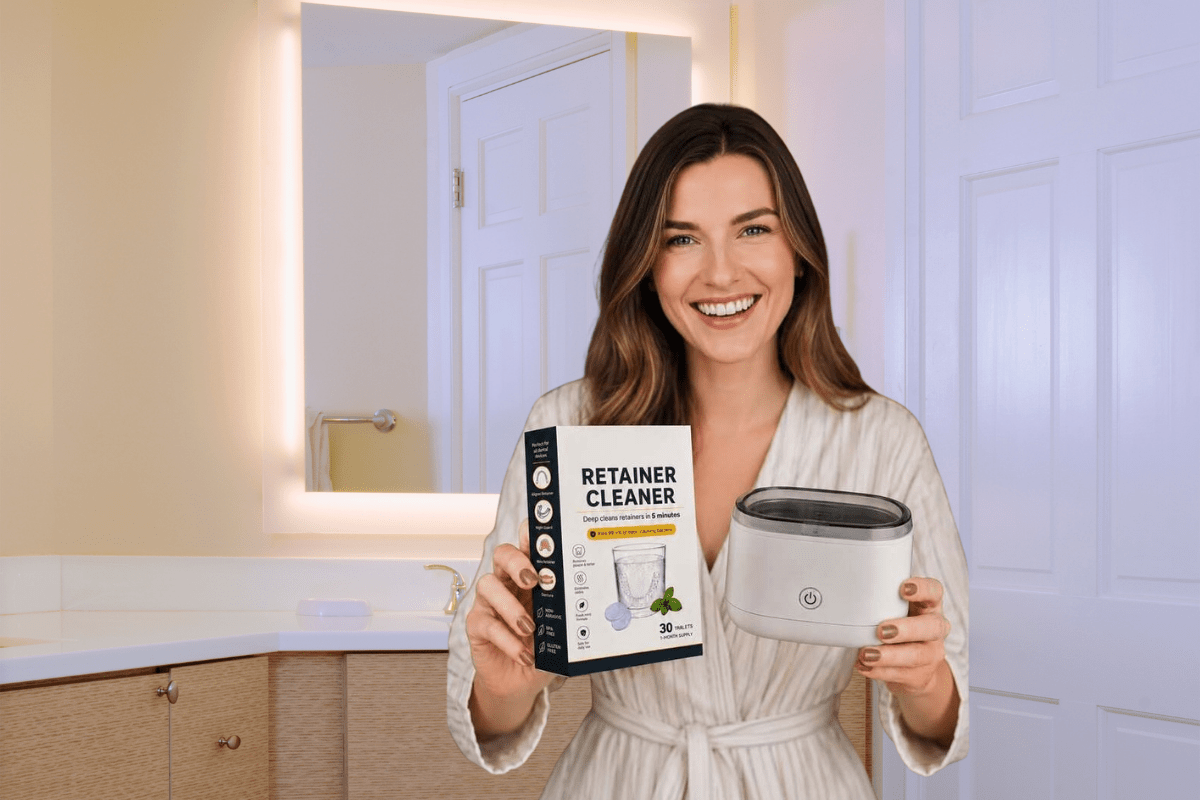
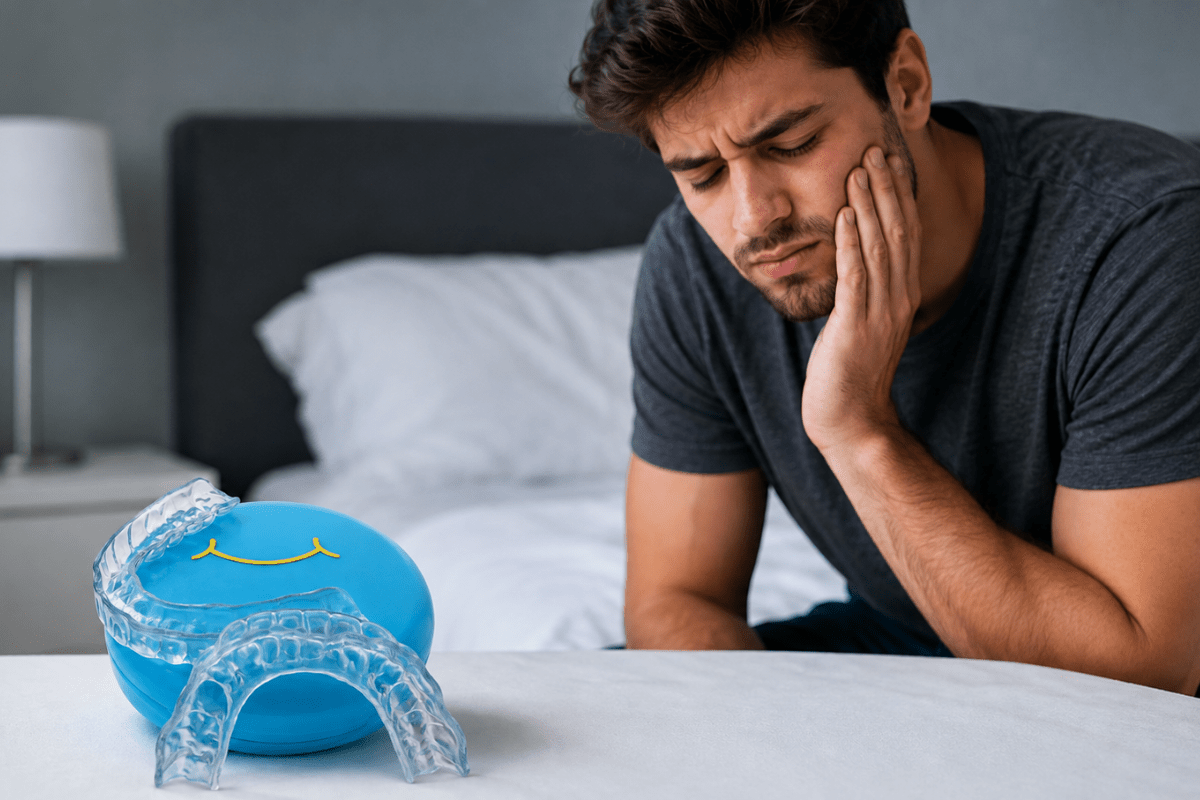
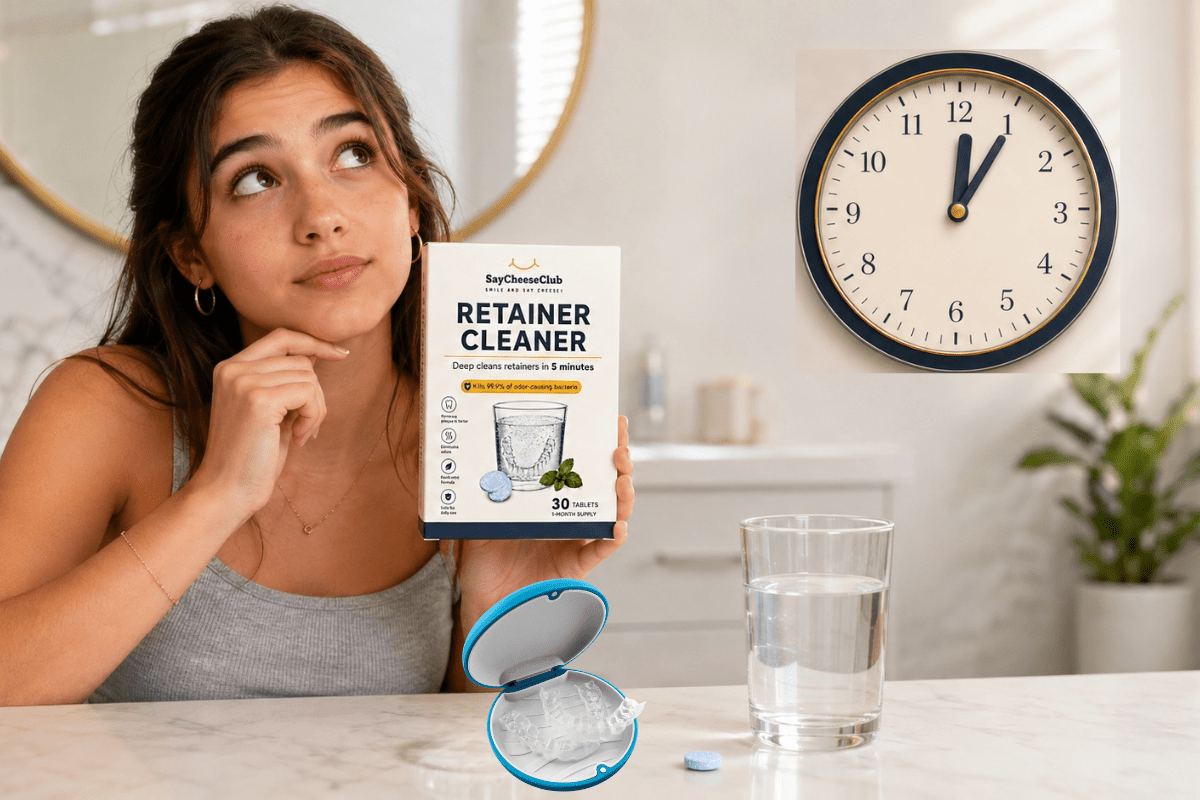
Aretainer turns yellow when plaque, saliva proteins, food particles, and bacteria build up on the plastic faster than your cleaning routine removes them, and that buildup gradually stains the material from the surface inward. The most common causes are infrequent cleaning, using hot water, skipping cleaning tablets or foam, and drinking coffee, tea, or wine while wearing it. The good news is that in most cases the yellowing can be reduced or removed with the right cleaning method, and prevented going forward with a few simple habit changes.
If your retainer has gone from clear to cloudy or yellow and you are not sure whether that is normal or a sign something is wrong, you are in the right place. Let us walk through exactly why this happens, what you can do about the staining you already have, and how to stop it from creeping back.
Why retainers turn yellow in the first place
Retainer plastic is porous at a microscopic level, which means it is not a perfectly smooth, sealed surface the way it might look to the naked eye. Saliva, plaque, and tiny food particles settle into that surface texture every time you wear it, and if they are not cleaned off regularly, they build up in thin layers that gradually change the color of the plastic from clear to cloudy to yellow.
A few specific habits speed this up significantly. Rinsing with only cold water instead of actually cleaning it removes very little of that buildup. Using hot water to rinse or clean it can warp the plastic and make the surface even more porous, which traps stains faster. Drinking coffee, tea, red wine, or dark sodas while wearing your retainer lets those staining compounds sit directly against the plastic. And simply forgetting to clean it for a few days at a time gives buildup a real head start that is much harder to reverse later.
Is yellowing dangerous, or just cosmetic
In most cases, yellowing itself is cosmetic rather than dangerous, but it is usually a visible sign of the same buildup that can also lead to odor, a rougher feeling surface, and in more advanced cases, a breeding ground for bacteria that is not great for your gums or the rest of your mouth. Mild to moderate yellowing is very common and very fixable. If your retainer feels rough, smells strong even after cleaning, or the discoloration has not budged after a few weeks of consistent cleaning, that is usually a sign it has absorbed more than surface level staining and may be closer to needing a replacement.
How to actually remove the yellow staining
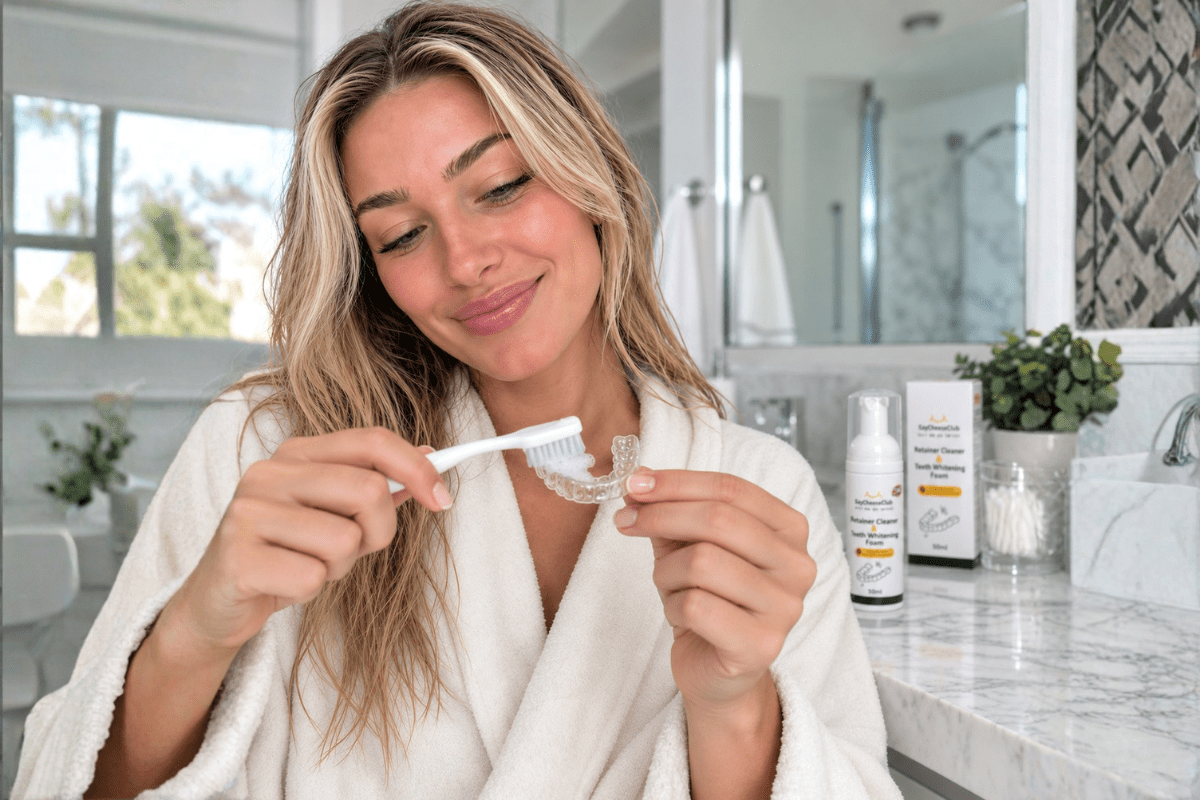
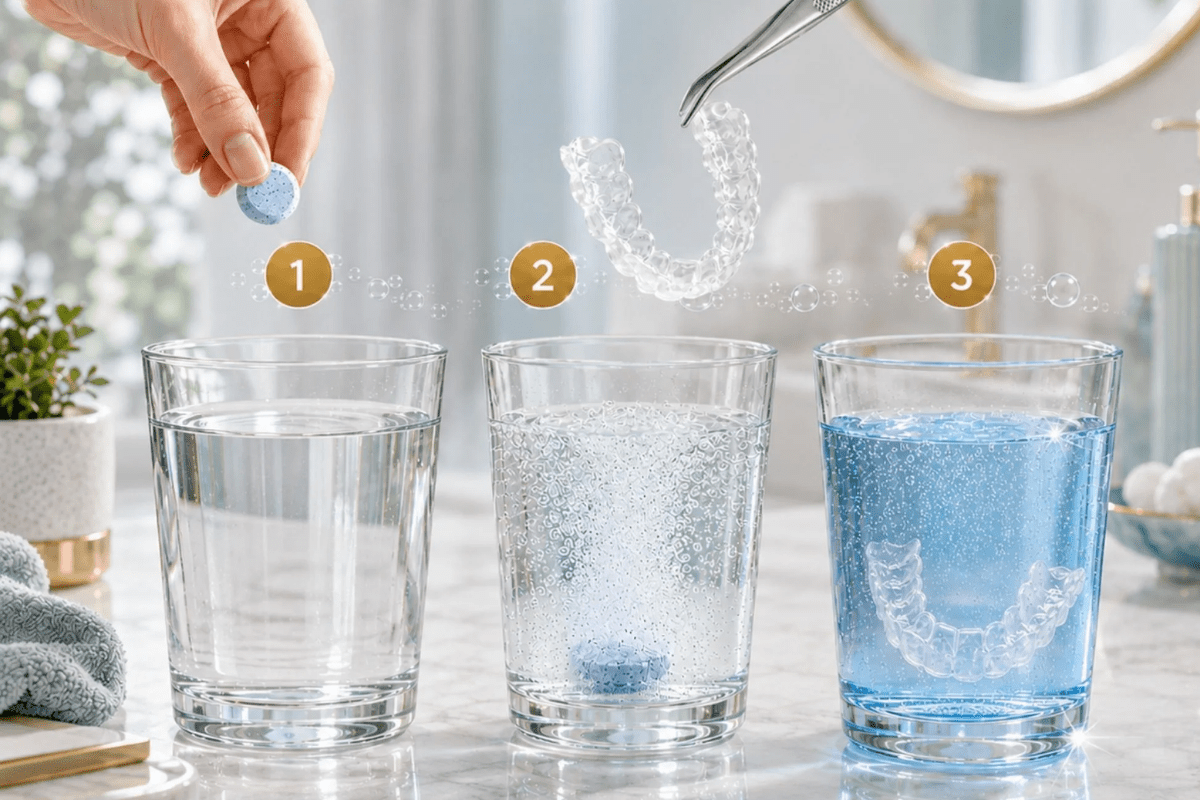
Start with a proper soak rather than just a rinse. A dedicated cleaning tablet or whitening foam designed for retainer plastic will do far more work than water alone, since these formulas are built to break down the exact buildup causing the discoloration in the first place.
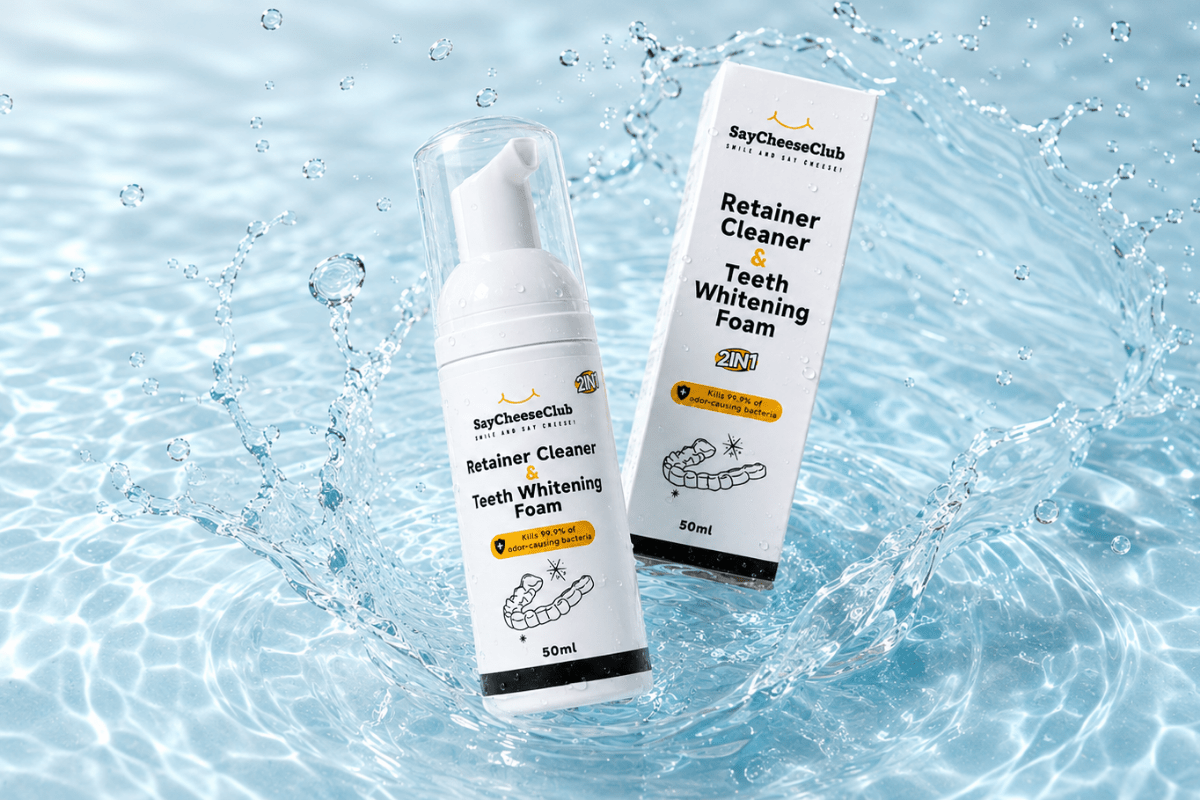
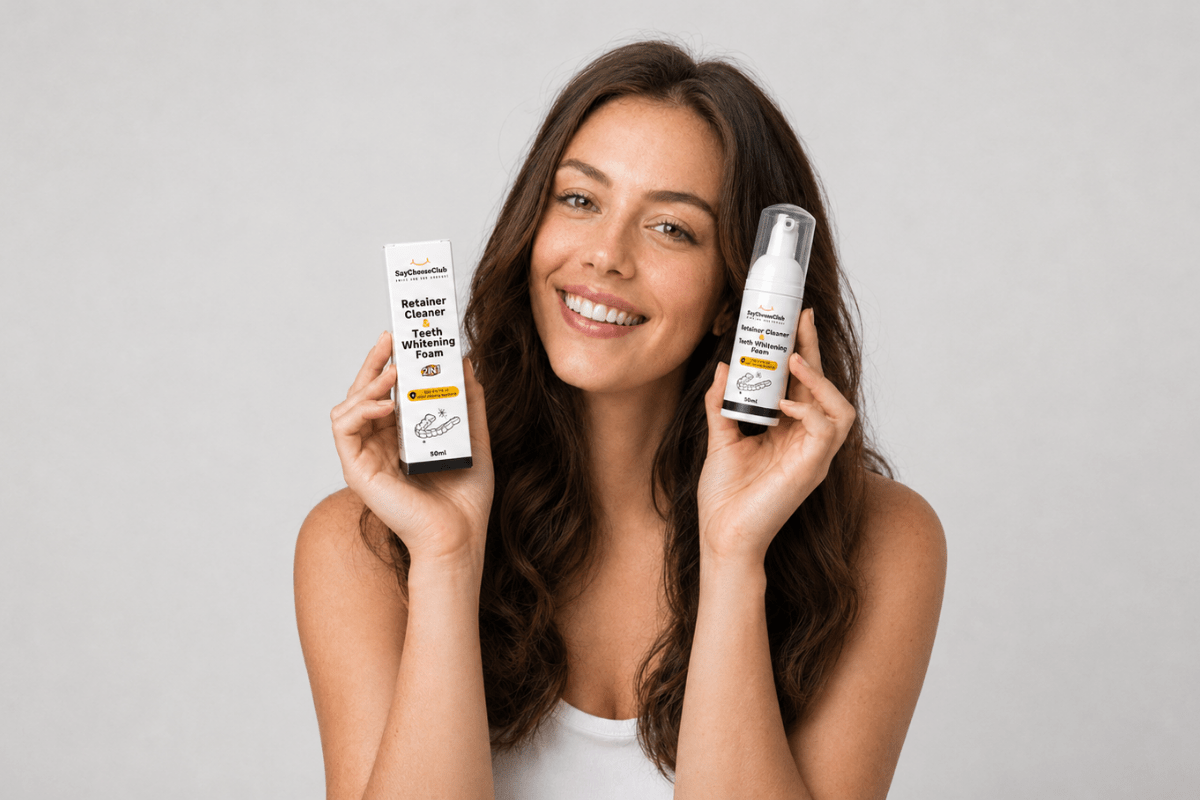
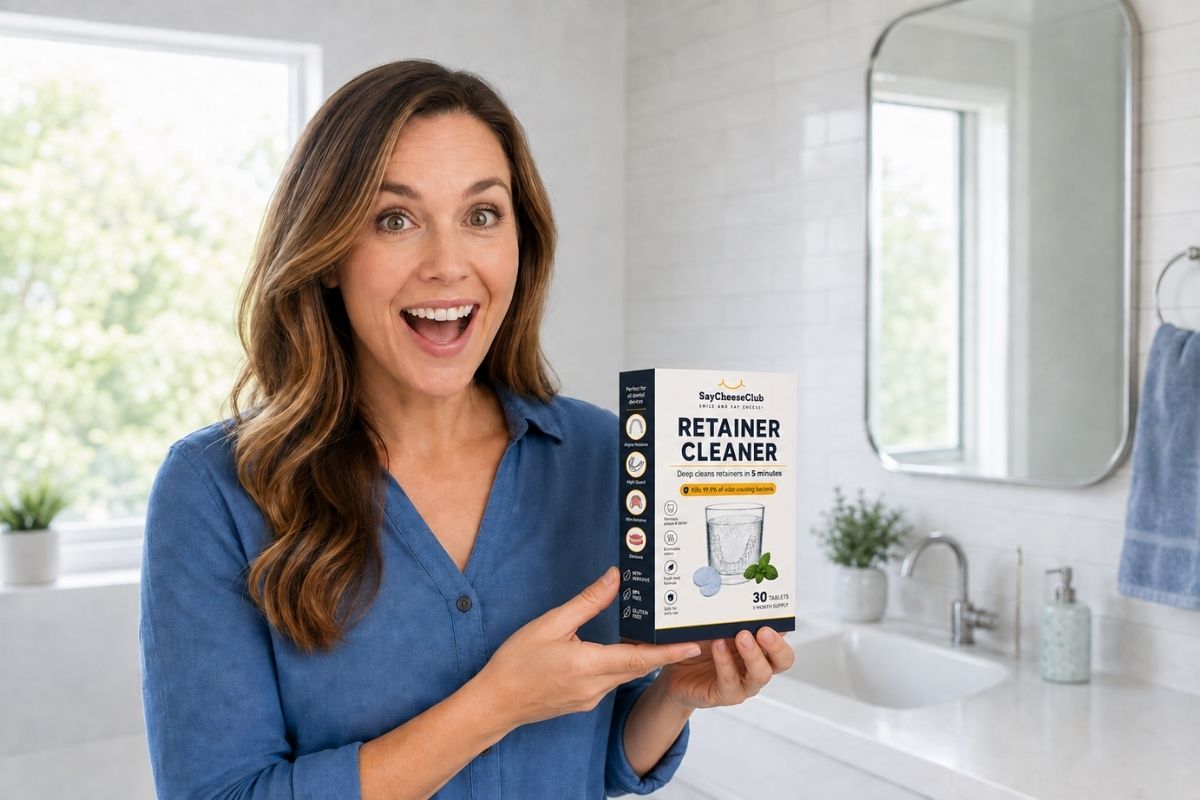
This is actually one of the more overlooked benefits of using a combined product instead of plain water or a quick brush. SayCheeseClub's retainer cleaner and teeth whitening foam is formulated to break down that surface buildup while gently lifting existing staining, which makes it a genuinely useful option if your retainer has already started to yellow rather than just something to prevent future staining.
After soaking, gently brush every surface with a soft bristled toothbrush, paying extra attention to any textured areas or seams where buildup tends to concentrate. Avoid regular toothpaste for this, since most formulas are too abrasive for retaining plastic and can dull the surface further rather than actually cleaning it. Rinse thoroughly with lukewarm water, never hot, until there is no residue or taste left.
Building a routine that actually keeps it clear
Prevention is genuinely easier than reversal here. Rinse your retainer every time you take it out, not just when you remember to. Do a full soak with a cleaning tablet or whitening foam at least a few times a week, and daily if you tend to notice buildup quickly. Avoid drinking anything but water while wearing it, and always brush your teeth before putting it back in so you are not sealing food particles and plaque against the plastic for hours at a time.
Making this part of your daily routine is easier than it sounds, especially if you are using something built to do double duty. SayCheeseClub's whitening foam cleans the retainer and works on your teeth in the same step, so keeping your retainer clear does not mean adding an extra task to your day, it just means upgrading the one you are already doing.
What about whitening your teeth at the same time
If part of what is bothering you is that your retainer looks yellow next to teeth you would also like brighter, it is worth knowing that most retainer safe whitening approaches use the same basic peroxide based chemistry. Crest, one of the most established oral care brands in the US, offers its 3D White Daily Whitening Serum as a mainstream option that works through a similar principle, swiped directly onto teeth daily, which shows just how common and well established this type of gradual, daily whitening approach really is.
When it is time to just replace it
Retainers are not meant to last forever, and even with great habits, most people replace theirs every one to two years depending on wear and how consistently they clean it. If the plastic feels rough no matter how much you clean it, if the yellowing has not improved after a few consistent weeks of proper cleaning, or if the fit feels different than it used to, those are all signs the material has absorbed more than surface staining and cleaning alone will not bring it back.
Do not let this slide any longer
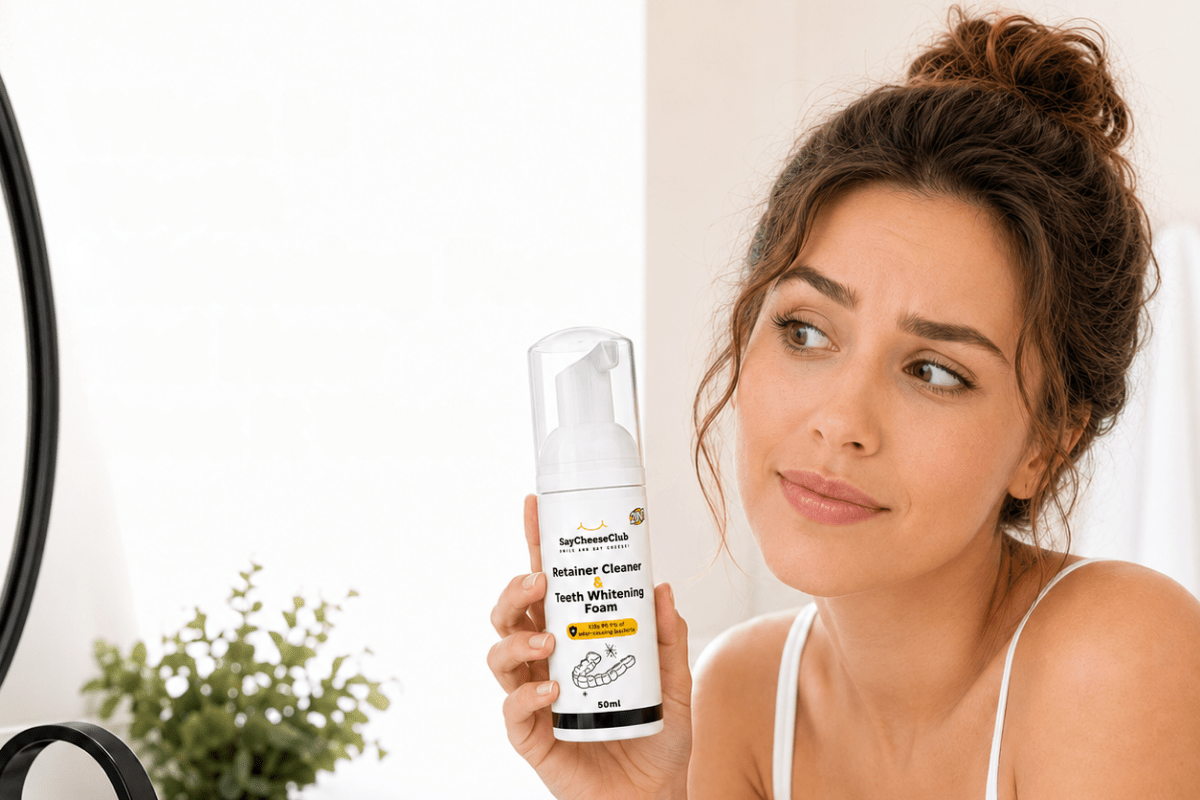
A yellowing retainer is one of those problems that only gets harder to fix the longer you wait, and the fix itself takes less effort than most people assume. Start today, not next week. SayCheeseClub's retainer cleaner and teeth whitening foam was built specifically to tackle this exact problem, cleaning your retainer and brightening your smile in one simple daily step, so grab it now and give your retainer the routine it has been missing before the staining gets any harder to reverse.
People also ask
Can a yellow retainer be cleaned back to clear
In most cases, yes, especially if the yellowing is mild to moderate and still fairly recent. A proper soak with a retainer safe cleaning product followed by gentle brushing typically removes most surface staining. Deep, long term discoloration may improve but not fully disappear.
How often should I clean my retainer to prevent yellowing
A full soak two to three times a week is the minimum for most people, with daily cleaning recommended if you drink coffee, tea, or wine regularly or notice buildup quickly. Rinsing every time you remove it should happen regardless of your soak schedule.
Does hot water help remove yellow stains from a retainer
No, hot water actually makes the problem worse. Heat can warp retainer plastic and make the surface more porous, which causes it to pick up stains faster rather than removing them. Always use lukewarm or room temperature water.
Is it normal for a retainer to yellow even with regular cleaning
Some gradual yellowing over many months is common even with a decent routine, since retainer plastic naturally wears over time. Rapid or severe yellowing despite consistent cleaning usually points to a habit that needs adjusting, like hot water use or skipping soaks.
Can toothpaste whiten a yellow retainer
It is not recommended. Most toothpaste is too abrasive for retainer plastic and can create tiny scratches that trap even more staining over time. A dedicated retainer cleaner or whitening foam is a safer and more effective choice.
How do I know if my retainer needs to be replaced instead of cleaned
If the plastic still looks or feels rough after proper cleaning, if yellowing does not improve after a few consistent weeks, or if the fit feels noticeably different than before, it is likely time to replace it rather than continue trying to clean it.
Shop Retainer Cleaner and Teeth Whitening Foam Now