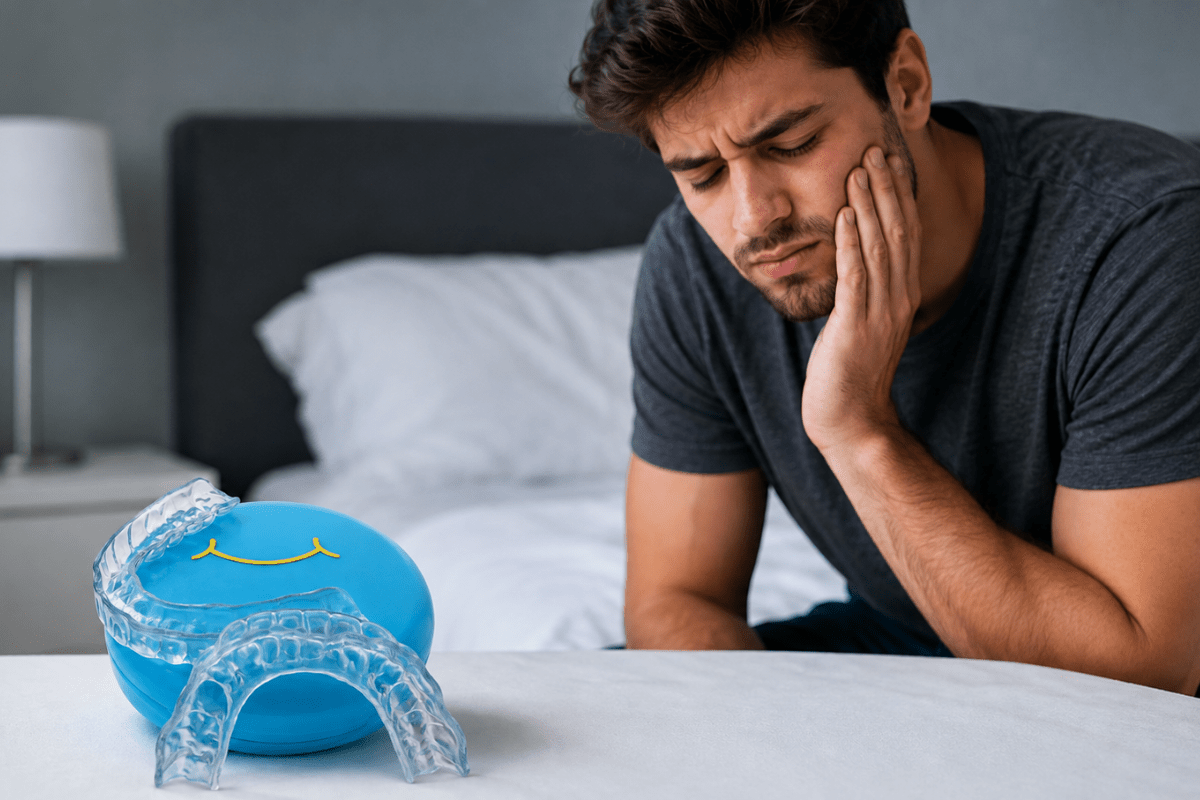
Crowded teeth are fixed by creating space in the jaw and then guiding the teeth into alignment. The most common treatments are braces and clear aligners, which apply gentle, steady pressure to move teeth over 6 to 36 months depending on severity. When there is not enough room, an orthodontist may add interproximal reduction (removing tiny amounts of enamel between teeth), a palatal expander to widen the upper jaw, or tooth extraction in severe cases. Crowding cannot correct itself and typically worsens with age, particularly in the lower front teeth. Preventing crowding is equally important: wearing a retainer holds your teeth in alignment and is what stops crowding from developing or returning after treatment.
That last sentence is the part most people find out the hard way. Let's walk through what actually causes crowding, every option for correcting it, and how to make sure you only have to fix it once.
What causes crowded teeth?
Crowding happens for one basic reason: there is not enough room in the jaw for every tooth to sit properly. Teeth then overlap, rotate, or push forward out of line. Several things contribute to that shortage of space.
- Genetics. This is the biggest factor. A jaw that is small relative to your tooth size runs in families, and so does tooth size itself.
- Wisdom teeth. For some people, third molars add pressure at the back of the arch. Not everyone experiences crowding from them, but it is worth discussing with your dentist.
- Early loss of baby teeth. When a baby tooth is lost too soon, neighboring teeth can drift into the gap and steal space from the permanent tooth still on its way.
- Childhood habits. Prolonged thumb sucking or extended pacifier use can affect how the arch develops.
- Natural shifting with age. Teeth move slowly throughout life. Lower front teeth are especially prone to gradual crowding because that area has the least room to begin with.
- Not wearing a retainer after orthodontic treatment. This is the most common cause of crowding coming back. Teeth are held by ligaments, not locked in bone, so without retention they drift toward their original positions.
How to fix crowded teeth: your treatment options
The right treatment depends on how severe the crowding is and what is causing it. An orthodontist determines this using an exam, digital scans, and X-rays. Here are the main approaches.
Braces
Traditional braces remain one of the most effective options, particularly for moderate to severe crowding. Brackets bonded to each tooth connect to an archwire that is adjusted over time, moving teeth into position. Treatment typically runs 12 to 36 months depending on complexity. Ceramic braces work the same way with tooth-colored brackets for a more discreet look.
Clear aligners
Clear aligners are a series of custom removable trays that apply controlled pressure, with a new set roughly every couple of weeks. They are best suited to mild and moderate crowding, and treatment often takes 6 to 18 months. Because they are removable, cleaning your teeth is easier, but results depend heavily on wearing them as directed.
Interproximal reduction (IPR)
IPR involves removing very small amounts of enamel between teeth to create space. It is a common way to avoid extraction in mild to moderate cases and is used alongside braces or aligners rather than on its own.
Palatal expanders
An expander gradually widens the upper jaw to create room. It is most effective in children and teenagers whose jaws are still developing. Adults can sometimes be treated this way, though it may require a surgically assisted approach.
Extraction
When crowding is severe and there is simply not enough jaw space, an orthodontist may recommend removing one or more teeth so the rest can be aligned properly. Many cases can be treated without extraction, and the decision should be based on long-term stability rather than a preference either way.
Veneers
Veneers are thin shells bonded to the front of the teeth. They can improve the appearance of very mild crowding, but they do not correct the underlying alignment. This is a cosmetic solution, not an orthodontic one.
Jaw surgery
In rare, severe cases where crowding is tied to underlying skeletal structure, surgery may be part of the treatment plan. This is uncommon and always determined by a specialist.
Why crowded teeth are worth fixing
Beyond appearance, crowding has practical consequences. Overlapping teeth are harder to brush and floss thoroughly, which raises the risk of decay and gum disease in the spots you cannot reach. Misalignment can also create uneven pressure across your bite, and that uneven wear tends to accelerate if you grind or clench your teeth at night. If that sounds familiar, our guide on what a night guard is explains how a guard protects your enamel from that added strain.
The step everyone underestimates: keeping your results
Here is the part that determines whether you fix your crowding once or twice.
Orthodontic treatment moves your teeth. It does not permanently anchor them. The ligaments holding your teeth have a memory, and left alone, teeth drift back toward where they started. That relapse is why so many adults who wore braces as teenagers find their lower front teeth crowding again years later.
Retainers are what prevent that. They do not move teeth that are already crowded, but they hold your alignment in place so crowding does not develop or return. Orthodontists consider retention part of the treatment, not an optional extra, which is why it should be in your budget from the start.
Prevention is a solution too
It is worth saying plainly: stopping crowding before it starts is just as valuable as correcting it afterward, and it costs a fraction as much.
A retainer is the right move if you fall into any of these groups:
- You finished orthodontic treatment with braces, Invisalign, Byte, or any clear aligner system, and you want those results to hold.
- Your old retainer is lost, cracked, or no longer fits. This is the moment crowding quietly begins, and replacing it early is far cheaper than re-treatment.
- You never had braces but notice your teeth shifting. Natural age-related movement is real, particularly in the lower front teeth, and a retainer helps keep things where they are.
That is exactly what our retainers are built for. You take an impression at home, our lab builds retainers molded to your exact teeth, and they ship to your door. Most people need both arches held, so the custom upper and lower retainer set is the straightforward way to keep your smile aligned, comfortably and affordably, without an orthodontist visit.
Shop Clear Retainers NowCrowded Teeth FAQs
Can crowded teeth be fixed without braces?
Yes, in many cases. Clear aligners are a common alternative for mild to moderate crowding. Whether they will work for you depends on how severe the crowding is and how much your teeth need to rotate, which requires an orthodontic assessment.
Can you fix crowded teeth without extraction?
Often, yes. Techniques such as interproximal reduction, arch expansion, and strategic alignment planning can create space without removing teeth. Extraction is generally reserved for severe crowding where stability would otherwise be compromised.
Do crowded teeth get worse over time?
Typically yes. Teeth continue shifting throughout life, and crowding tends to progress gradually, especially in the lower front teeth. Without retention after treatment, it usually returns.
Can crowded teeth fix themselves?
No. Crowding is a space problem, and it does not resolve on its own. It requires treatment that creates room and repositions the teeth.
Are crowded teeth genetic?
Genetics is the biggest single factor, since jaw size and tooth size are both inherited. That said, timing, habits, and how teeth erupt also play a role, so it is not purely hereditary.
How much does it cost to fix crowded teeth?
It varies widely based on severity, whether you choose braces or aligners, how long treatment lasts, and whether extra steps like extractions or expanders are needed. Retainers should be factored into your total budget from the beginning.
Do I have to wear a retainer after fixing crowded teeth?
Yes. Retention is what keeps your results. Teeth naturally drift back toward their original positions, so consistent retainer wear is the only reliable way to prevent the crowding from returning.
The bottom line
Crowded teeth come down to a shortage of space, and fixing them means creating that space and guiding your teeth into place, usually with braces or clear aligners. What determines whether the result lasts is what happens afterward. Wear your retainer, replace it when it wears out, and the smile you invested in stays exactly where you put it.
Get your custom upper and lower retainer set from SayCheeseClub molded to your teeth, shipped to your door, and priced so keeping your results never becomes the expensive part.