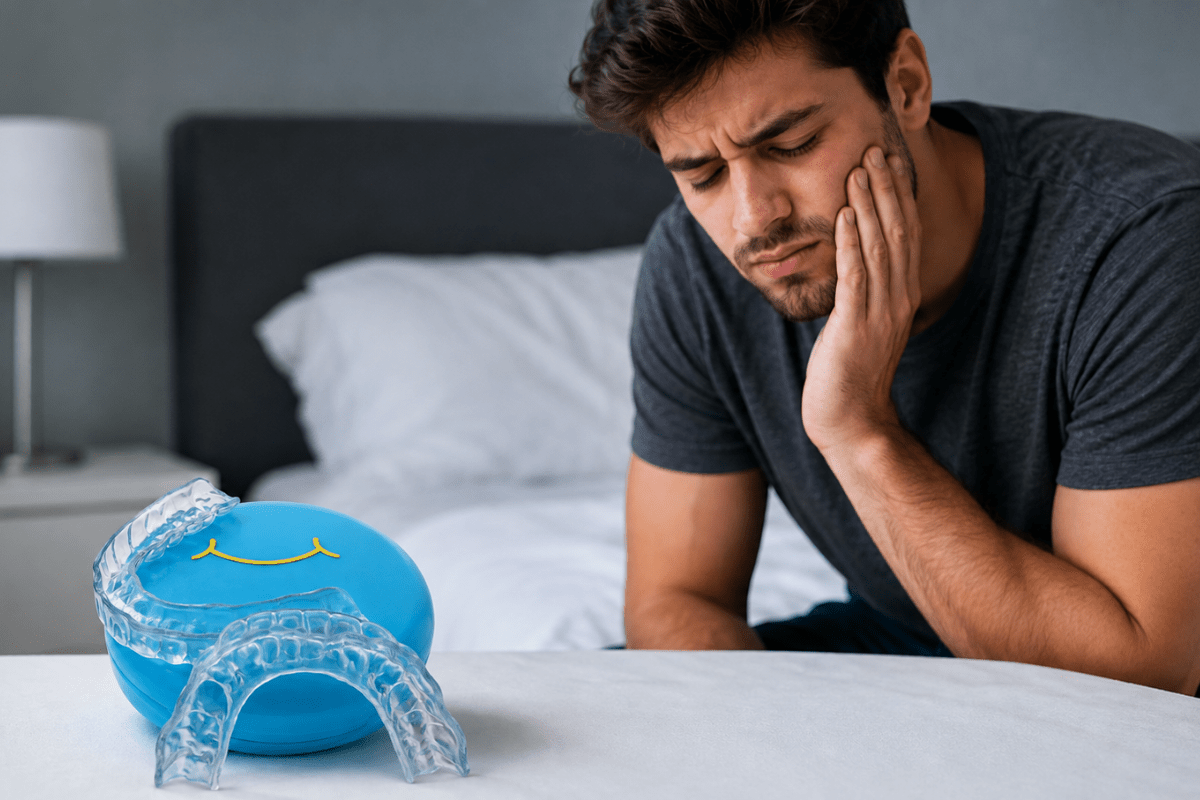
No, it is not bad to wear a night guard every night. For most people, nightly use of a properly fitted night guard is safe and often exactly what dentists recommend, because it protects your teeth from grinding and clenching every single night the damage would otherwise happen. The real risk isn't nightly wear itself, it's wearing an ill-fitting or partial-coverage guard long term, which can put uneven pressure on your teeth. A well-made, full-coverage custom guard avoids that, so consistency becomes a good thing, not a problem.
So if you've been lying awake wondering whether your nightly habit is quietly wrecking your teeth: relax. It's almost certainly helping. But let's unpack the nuance, because "it depends on the guard" is the part that actually matters.
Why nightly use is a good thing
Here's the simple logic. If you grind or clench, you're doing it every night, or close to it. A night guard only protects your teeth on the nights you actually wear it. So wearing it every night isn't overkill, it's the whole point.
Skip nights and you leave your enamel exposed to the exact wear, chips, and jaw strain you bought the guard to prevent. Plenty of people safely wear night guards for years with no issue, as long as the guard fits and gets replaced when it wears down. If you're still fuzzy on how these are made and fitted, our guide on what a night guard is breaks it down from scratch.
So where is the "is it bad?" Fear comes from?
Valid question, and the honest answer is: the fear is real, but it's aimed at the wrong target. Wearing a guard at night isn't the problem. A bad guard worn nightly can be. Here's what actually causes issues:
- Cheap, ill-fitting guards. A boil-and-bite guard you molded at home can end up thick in some spots and thin in others. That uneven pressure, repeated night after night, is what can nudge teeth out of position over time.
- Partial-coverage guards. If a guard only covers some of your teeth, the uncovered ones can slowly drift or shift while the covered ones stay put. Full-coverage guards keep everything aligned.
- Worn-out guards. As a guard thins from heavy grinding, its contact points change and pressure stops distributing evenly. A guard past its prime needs replacing.
Notice the pattern? Every one of those is a fit and quality problem, not a "you wore it too often" problem. A precision custom guard that covers your full arch sidesteps all three.
"My bite feels weird in the morning" should I worry?
Probably not. A lot of people notice their teeth or jaw feel slightly different right after taking the guard out, especially heavy clenchers. That sensation usually comes from your jaw muscles relaxing and adjusting overnight, and it typically fades within minutes to a couple of hours of waking up.
That temporary morning feeling is normal. What's not normal is a bite that feels permanently off, new gaps between teeth, clicking, or trouble chewing that sticks around. Those are signs to check your fit and talk to a dentist. A night guard should make your mornings better, not worse.
How to wear one every night, safely
Nightly use is easy to do right. A few habits keep it that way:
- Choose a full-coverage custom guard. Fit is everything, and a guard molded to your exact teeth spreads pressure evenly.
- Keep it clean. Rinse it each morning and let it dry. A grimy guard breeds bacteria and gets uncomfortable, which is the fastest way to stop wearing it.
- Replace it when it wears down. Thinning, cracks, or a loosening fit mean it's time for a new one.
- Speak up if something feels wrong. Ongoing pain or bite changes are worth a dentist's eyes, not a shrug.
That's the whole reason our custom night guards are full-coverage and molded to your exact teeth: so wearing one every night is pure protection, with none of the fit problems that give nightly use a bad reputation.
Is It Bad to Wear a Night Guard Every Night FAQs
Can wearing a night guard every night damage my teeth?
A properly fitted, full-coverage guard won't. It's designed to protect your teeth from grinding, and nightly use is how it does that job. Damage is associated with poorly fitted or low-quality guards, not with consistent use of a good one.
Can a night guard shift my teeth or change my bite?
It's uncommon with a well-made custom guard. Shifting is usually linked to ill-fitting or partial-coverage guards that apply uneven pressure over months or years. A full-coverage custom guard is specifically designed to keep your bite stable.
Why does my jaw or bite feel different in the morning?
That's typically your jaw muscles relaxing and adjusting overnight, and it usually fades within minutes to hours of waking. If the feeling lingers all day or your bite seems permanently altered, have your fit checked.
Do I really need to wear it every single night?
If you grind or clench regularly, yes, nightly wear gives you the most consistent protection. Skipping nights simply leaves your teeth exposed to the wear you're trying to prevent.
How do I keep a night guard safe for daily use?
Use a full-coverage custom guard, clean and dry it every morning, store it in its case, and replace it once it thins, cracks, or stops fitting snugly.
How long can I safely use one night guard?
It varies with how heavily you grind, but many last from one to a few years with good care. Replace it sooner if it shows wear, since a thinned guard stops distributing pressure the way it should.
The bottom line
Wearing a night guard every night isn't bad, it's the smart, protective thing to do if you grind or clench. The only real variable is the guard itself. Get a full-coverage custom fit, keep it clean, and replace it when it wears out, and nightly use becomes exactly what it's meant to be: a quiet, nightly shield for your smile.
Protect your smile every night with a custom SayCheeseClub night guard full-coverage, molded to your teeth, made for consistent nightly wear.