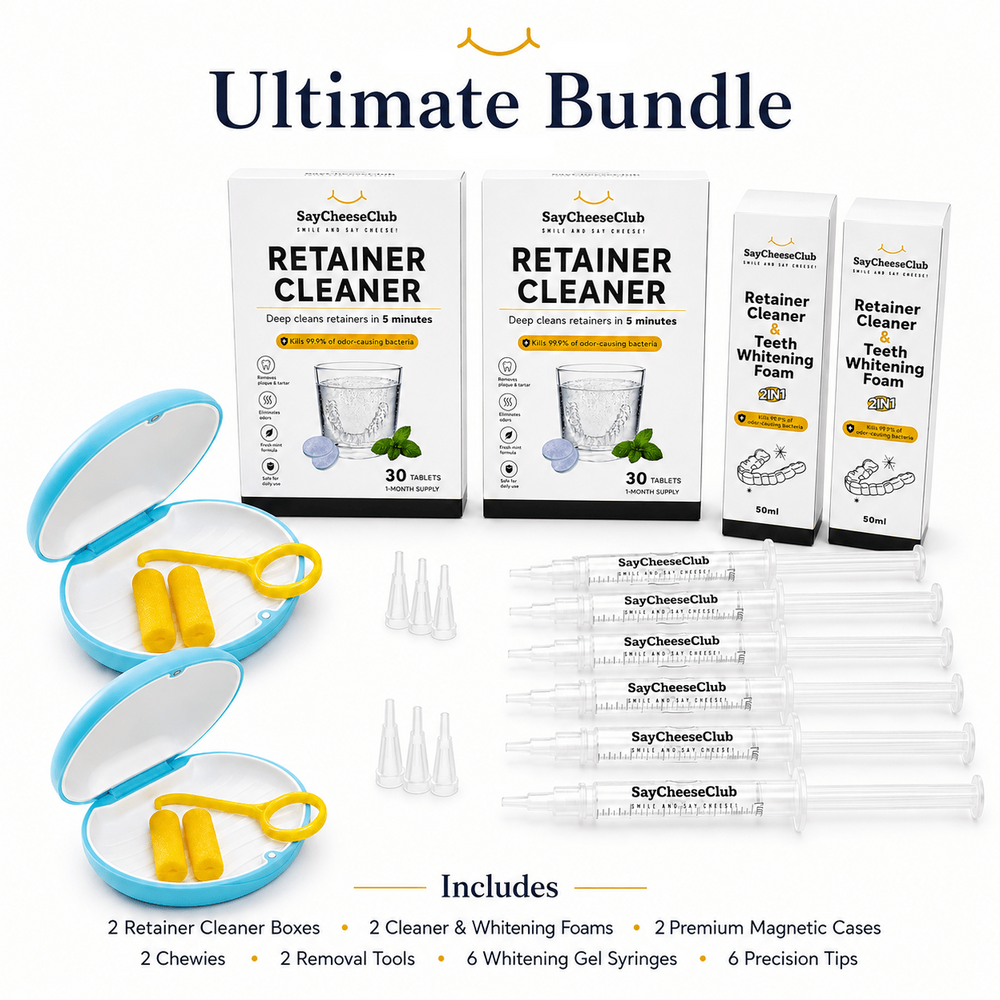
You popped your retainer out, actually looked at it for once, and… yeah. Cloudy. Maybe a faint smell. Possibly a little white film you're now choosing not to think too hard about.
Take a breath. You're not gross. This is just what happens when you park a piece of plastic in your mouth every night and then mostly forget it exists. The good news is that cleaning a clear retainer is genuinely easy. The bad news is that most people do one or two things that quietly wreck theirs, and they have no idea until the fit feels off.
So let's fix both. Here's how to actually clean your clear retainer, what to keep far away from it, and how to tell when no amount of scrubbing will save it.
The 30-second daily routine
This is the part that keeps the gunk from ever building up in the first place.
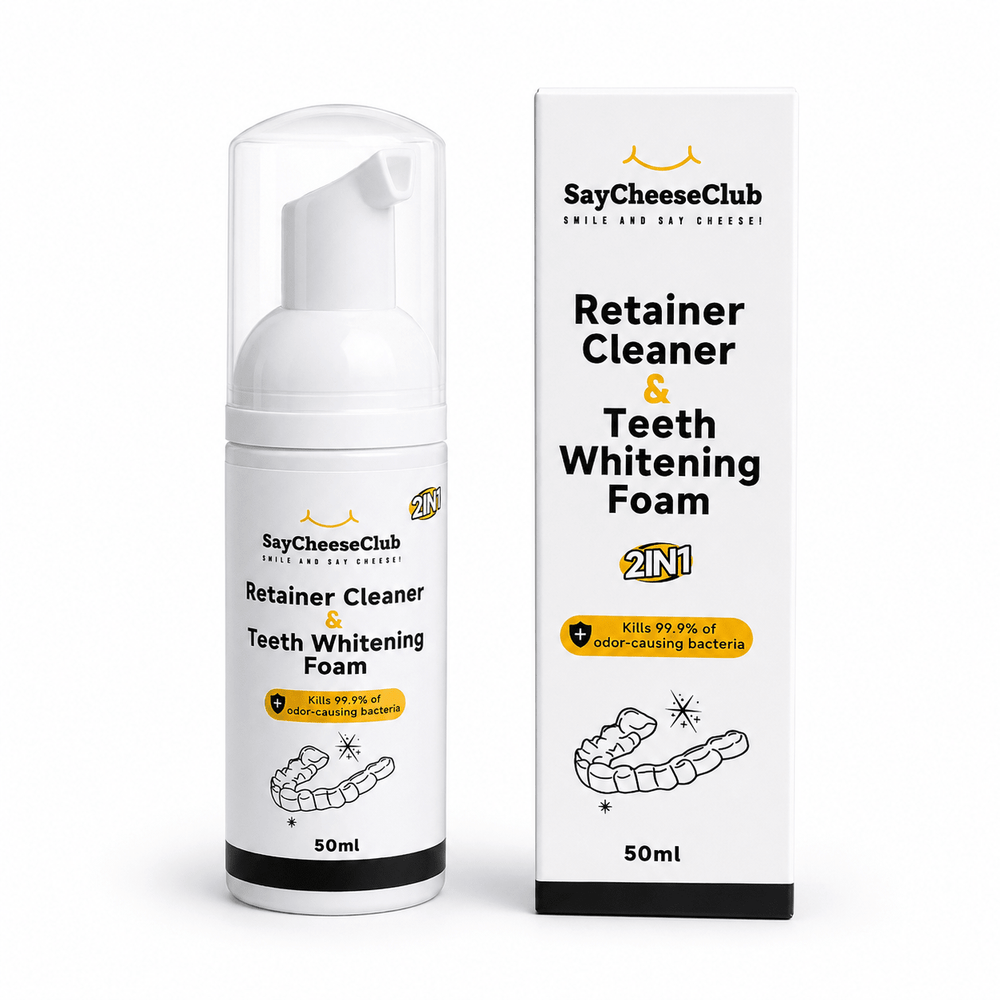
Every morning when you take it out, rinse it right away under cool water, before the saliva and plaque have a chance to dry on and turn into cement. Then give it a soft, gentle brush. A spare soft-bristle toothbrush works perfectly, paired with a tiny bit of mild, clear dish soap or unscented hand soap.
That's it. Rinse, gentle brush, done. The whole thing takes less time than scrolling your phone while the coffee brews.
The stuff that secretly ruins retainers
Here's where people go wrong, usually with good intentions.
- Hot water. This is the big one. Boiling water, the dishwasher, a steamy car dashboard, all of it warps the plastic and throws off the fit. A warped retainer is a dead retainer. Cool or lukewarm only.
- Regular toothpaste. It feels logical, but toothpaste is mildly abrasive. It carves tiny scratches into the surface, and those scratches become cozy little homes for bacteria and stains. Skip it.
- Alcohol mouthwash. It can dry out and discolor the plastic over time. Not the move.
- Bleach or harsh cleaners. Strong stuff can eat at the material and leave a taste you'll regret. Hard pass.
If you only remember one thing from this whole article, make it the hot water rule. It's the mistake that quietly ends more retainers than anything else.
The weekly deep clean
Daily brushing handles the surface. Once a week, give it a proper soak to knock out the buildup you can't see.
You've got a few easy options, pick whichever you have on hand:
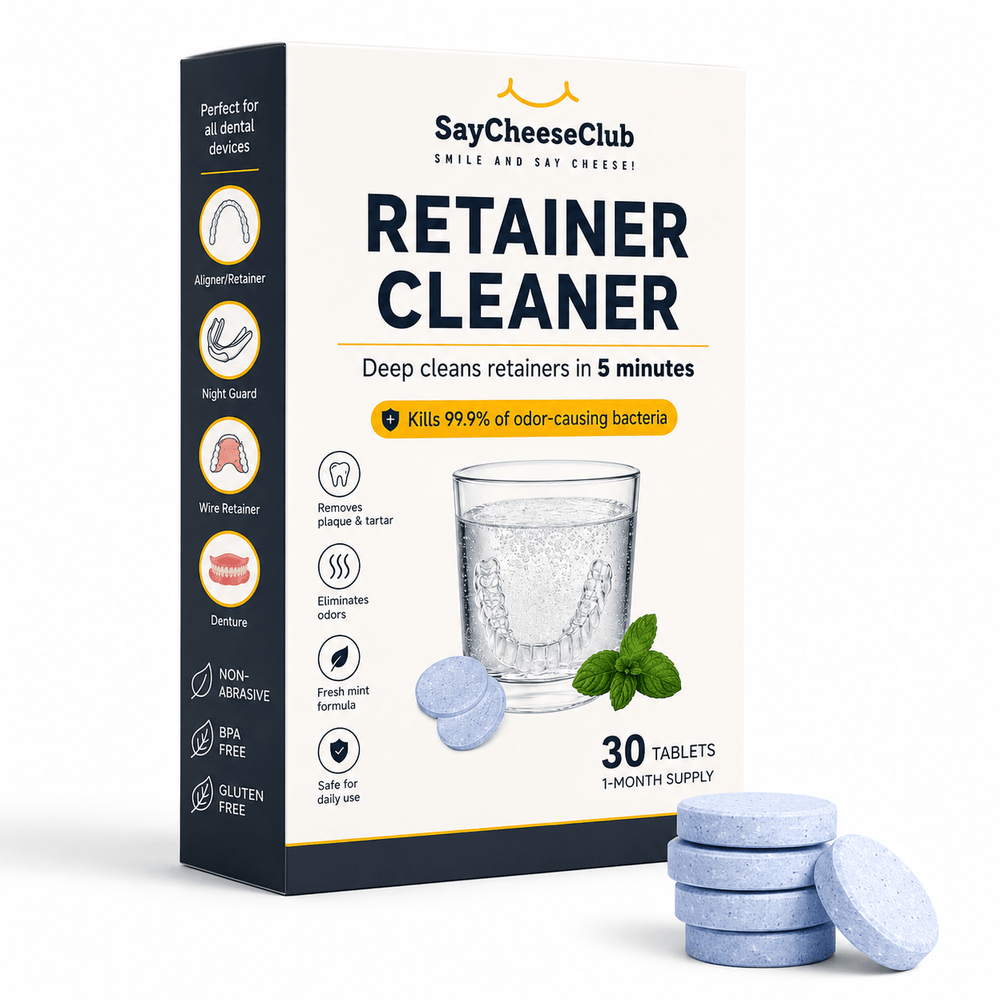
- Retainer cleaning tablets dropped into a glass of cool water. Drop it in, walk away, come back to a fresh retainer.
- A white vinegar soak. Mix equal parts cool water and white vinegar, soak for 15 to 20 minutes, then brush gently and rinse well. Great for that cloudy mineral film.
- Baking soda if odor is the main problem. A little dissolved in water neutralizes the smell without scratching anything.
Don't leave it soaking for hours hoping for a deeper clean. Longer isn't better here, and a quick weekly soak does the job.
Don't forget the case
Be honest: when did you last clean the case? A spotless retainer living in a grimy case is just going to get dirty again. Wash it with soap and water every few days, let it dry fully, and you've closed the loop.
And while we're here, always store your retainer in that case, dry, the moment it's out of your mouth. The two places retainers go to die are the napkin at a restaurant and the edge of the bathroom sink.
When cleaning isn't enough anymore
Sometimes a retainer is dirty. Sometimes it's just… done. If the cloudiness won't budge no matter what you soak it in, or you spot cracks, a smell that survives every cleaning, or a fit that suddenly feels loose or tight, that's your retainer telling you its time is up. We rounded up the full list in 10 signs it's time to replace your clear retainers so you can tell the difference between "needs a scrub" and "needs replacing."
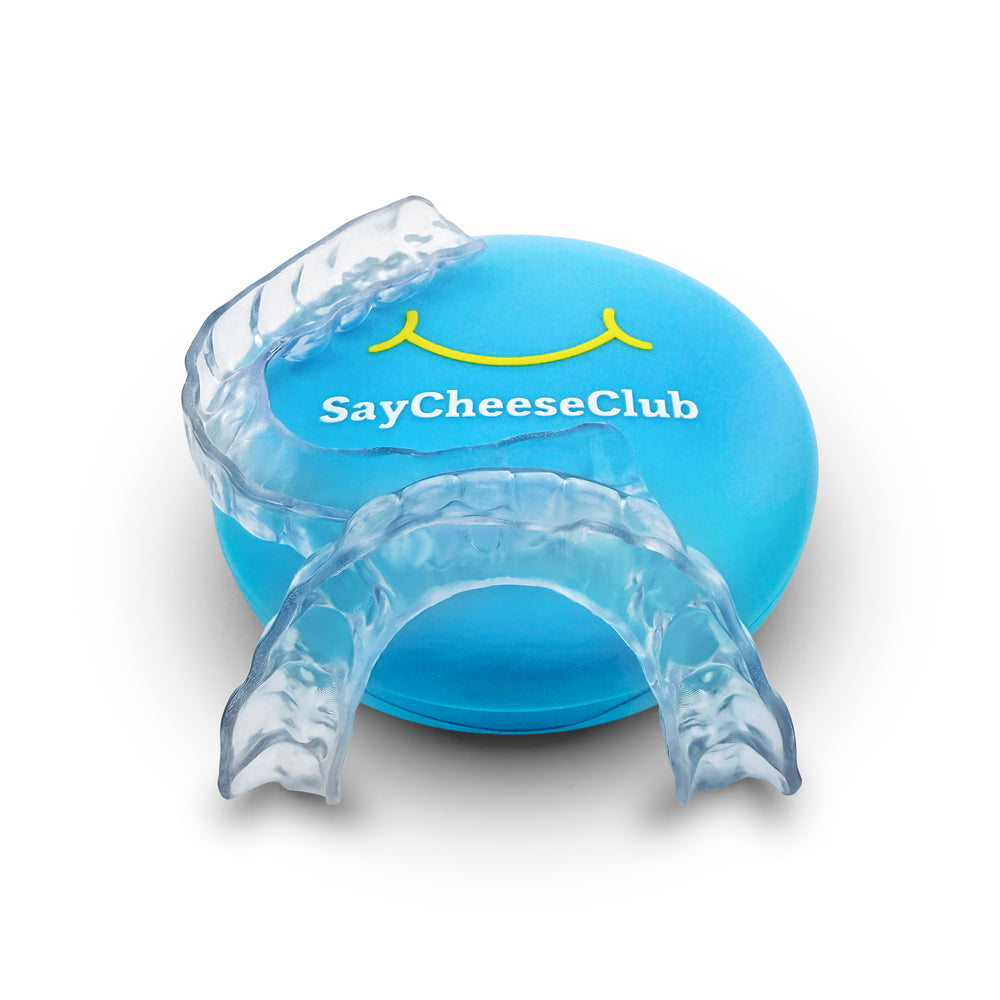
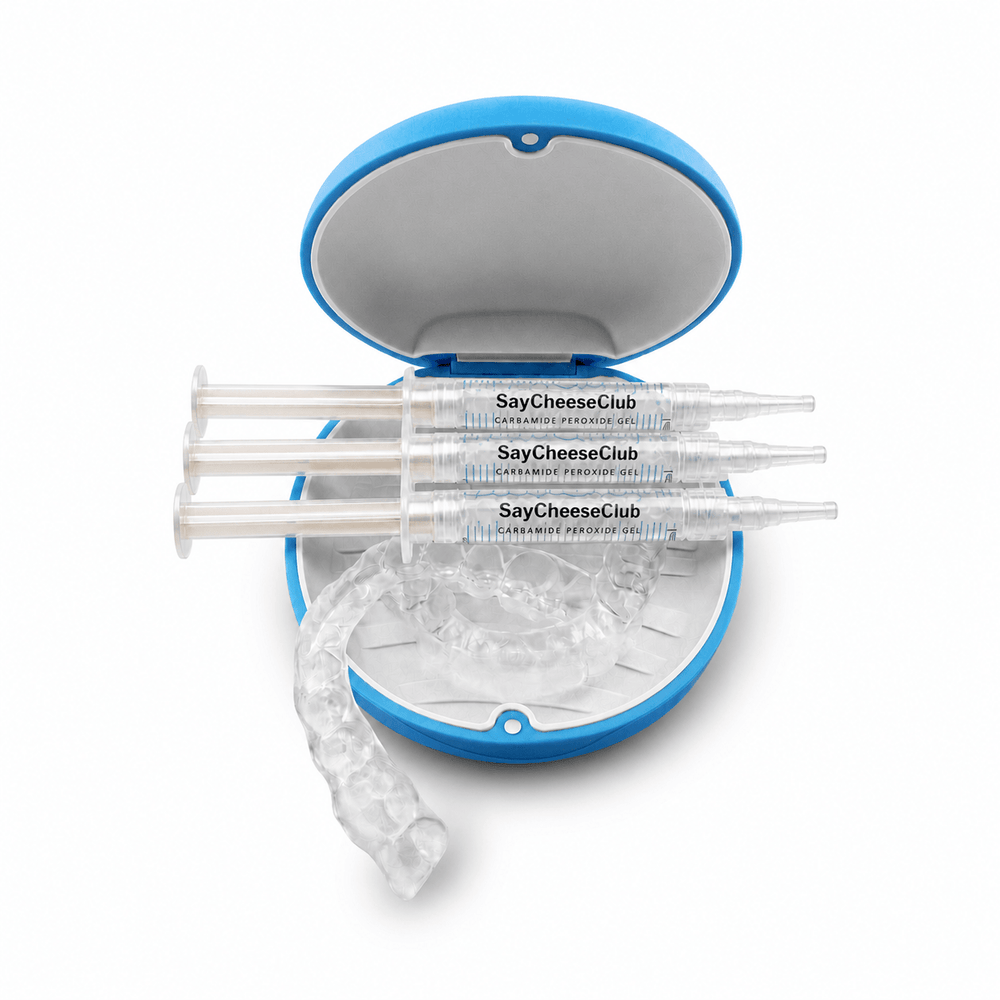
If yours is past saving, you don't need an orthodontist visit to start fresh. A custom upper and lower retainer set is molded to your exact teeth from an impression you take at home, so you can swap in a clean, perfectly-fitting pair without the office trip or the office price.
Cleaning Clear Retainers FAQs
Can I use toothpaste to clean my retainer?
Better not to. Toothpaste is slightly abrasive and scratches the plastic, and those scratches trap bacteria and stains. Mild dish soap and a soft brush clean just as well without the damage.
Can I soak my retainer in mouthwash?
It's not ideal. Most mouthwashes contain alcohol, which can dry out and discolor the plastic over time. A cleaning tablet or a diluted vinegar soak is the safer call.
How do I get rid of the cloudy white film?
That's usually mineral and plaque buildup. A 15 to 20 minute soak in equal parts cool water and white vinegar, followed by a gentle brush, lifts it off. If it still won't clear, the surface may be permanently etched, which means it's time for a new one.
Can I boil my retainer to disinfect it?
No, and this one's important. Heat warps the plastic and ruins the fit, so boiling, the dishwasher, and hot water are all off the table. Stick to cool water and a soak instead.
How often should I deep clean it?
A quick rinse and brush daily, plus a proper soak about once a week. That rhythm keeps it clear, fresh, and gunk-free without much effort.
Why does my retainer still smell after I clean it?
Lingering odor usually means bacteria has settled into tiny scratches or that it's simply getting old. Try a baking soda or vinegar soak, and clean the case too. If the smell keeps coming back, it's probably time to replace it.
The short version
Clean clear retainers come down to a few simple habits: rinse and brush daily with mild soap, soak once a week, keep the case clean, and never, ever go near hot water. Do that and your retainer stays clear, comfortable, and fit for the job.
And when it's finally run its course, starting over is easy.
Get your custom upper and lower retainer set at SayCheeseClub molded to your teeth, shipped to your door, no orthodontist markup.