You put in the time. Months, maybe years, of braces or aligners to get your smile exactly where you wanted it. Now one thin, clear retainer is the thing holding all that progress in place. The catch is that wearing it isn't enough. If you want it to keep doing its job (and stay invisible while it does), you have to keep it clean.
Here's the thing about clear retainers: they hide nothing. Every bit of plaque, every skipped cleaning, every coffee you forgot to take it out for shows up fast because the whole point of them is that you can see right through them. The upside? Cleaning them takes seconds once you know the right way to do it.
This is your full care guide. Start with the quick version, then read on for the why, the mistakes to dodge, and what to do when something seems off.
Clear Retainer Care at a Glance
Every day
- Rinse with lukewarm water the moment you take it out. Never hot water, it warps the plastic.
- Gently brush all surfaces with a soft toothbrush and a drop of mild, unscented dish soap. Skip the toothpaste, it's too abrasive.
- Let it air dry completely before sealing it in its case.
Once a week
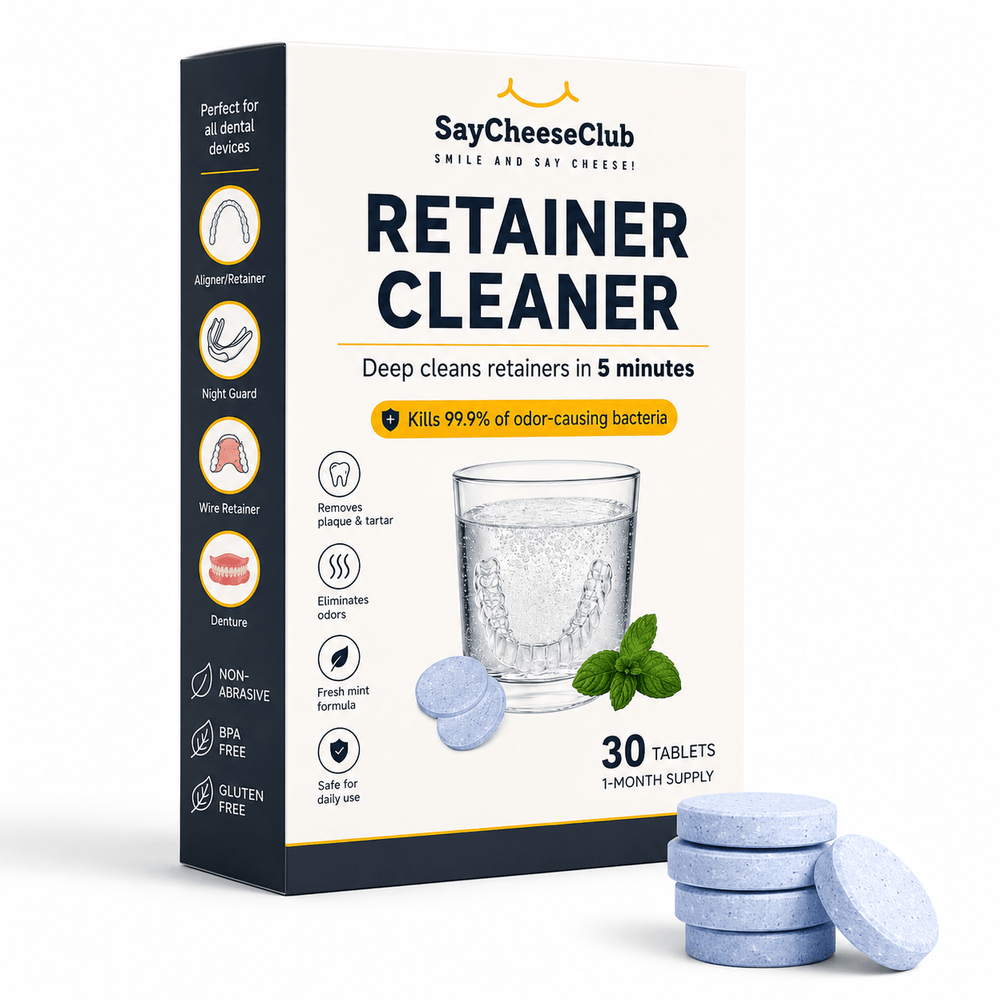
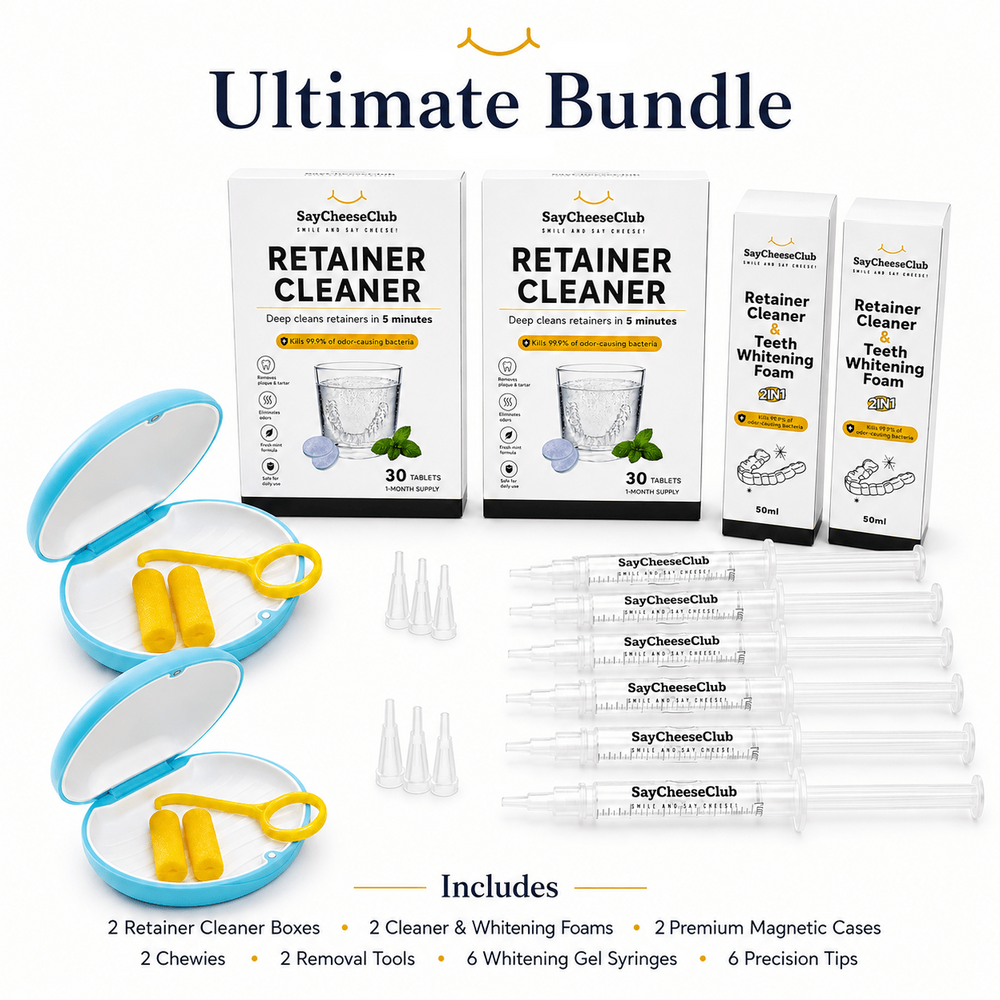
- Soak for 15 to 20 minutes in a vinegar-and-water mix, a baking soda solution, or a retainer cleaning tablet.
- Give it a gentle brush afterward and rinse thoroughly.
That's the whole routine. Everything below is just the reasoning and the troubleshooting behind it.
Why Cleaning Your Clear Retainer Actually Matters
Your retainer sits against your teeth and gums for hours at a time, soaking in saliva, bacteria, and traces of whatever you ate or drank. Leave it uncleaned and a few predictable things start to happen.
Bacteria and plaque buildup
A warm, moist retainer is a perfect home for bacteria. Left alone, that bacteria forms the same sticky plaque film you get on your teeth, and over time plaque can harden into tartar that's genuinely tough to remove. On a clear retainer, that buildup also shows up as a chalky white haze you can't miss.
Odor and staining
That faint funky smell some retainers develop? That's bacteria. And because clear retainers are, well, clear, they stain easily from coffee, tea, wine, and general daily use. Discoloration isn't just a looks problem. It's usually a sign that buildup has been sitting too long.
Wear and fit
Leftover acids, sugars, and plaque slowly break down the plastic. A neglected retainer is more likely to warp, cloud, or crack early, which means replacing it sooner than you should have to. Keeping it clean genuinely makes it last longer.
The Most Common Clear Retainer Mistakes (and How to Avoid Them)
Even people who wear their retainer faithfully tend to slip up on the care. Here are the big ones.
Using hot water. This is the number one retainer killer. Heat warps clear plastic almost instantly and ruins the fit. If the water feels hot on your hand, it's too hot for your retainer. Lukewarm, always.
Using toothpaste. It feels logical, but most toothpaste is abrasive and leaves tiny scratches in the plastic. Those scratches cloud the surface and give bacteria places to hide. A drop of mild dish soap does the job without the damage.
Skipping the daily rinse. Let saliva and debris dry on the retainer and it becomes much harder to clean later, plus you're basically inviting bacteria to settle in. A ten-second rinse the second you take it out prevents most of that.
Reaching for bleach or harsh mouthwash. Bleach, alcohol-based mouthwash, and strong cleaners can degrade the material and irritate your gums. Stick to gentle, retainer-safe options.
Storing it wet, or storing it loose. Sealing a damp retainer in a closed case grows bacteria fast, and tossing it on a counter or wrapping it in a napkin is how retainers get lost or thrown out. Dry it first, then keep it in its case, away from heat.
Troubleshooting: When Something Seems Off
Sometimes things go sideways even with a decent routine. Here's how to read the signs.
Smell or staining that won't go away
First, try a stronger deep clean. A vinegar soak followed by a gentle baking soda scrub, or a retainer tablet, clears up most lingering issues. If the smell or discoloration sticks around no matter what, the plastic may have tiny cracks or absorbed staining for good. That's a sign it's near the end of its life.
Cracks or warping
If you spot a crack, split, or a warped edge, stop wearing it. A damaged retainer can shift your teeth the wrong way or rub your gums raw. If you have a backup, wear that in the meantime so your teeth don't start drifting.
Gum or mouth irritation
Sore cheeks, gums, or tongue can come from rough edges or bacterial buildup. Tighten up your cleaning routine first and make sure you're getting every surface. If a sharp spot keeps bugging you, it's worth getting a fresh, properly molded one.
A fit that's changed
A retainer that suddenly feels tight, loose, or like it doesn't quite snap in is telling you something. It may be warped, or your teeth may be starting to move. Wearing it more consistently can help if you catch it early, but if it doesn't feel right within a day or two, don't force it. A retainer that doesn't fit isn't protecting your smile, and that's the whole reason you wear one.
How Long Do Clear Retainers Last?
With good care, clear retainers usually last somewhere from 6 months to a few years, depending on the material, whether you grind at night, and how well you clean them. They're thinner than other retainer types, so heat and wear affect them faster. When you see cracks, cloudiness that won't clean out, or a fit that's gone off, it's time for a new set.
And here's the part worth taking seriously: the moment your retainer stops fitting, your teeth can begin sliding back toward where they started. Replacing it on time is how you protect everything you worked for.
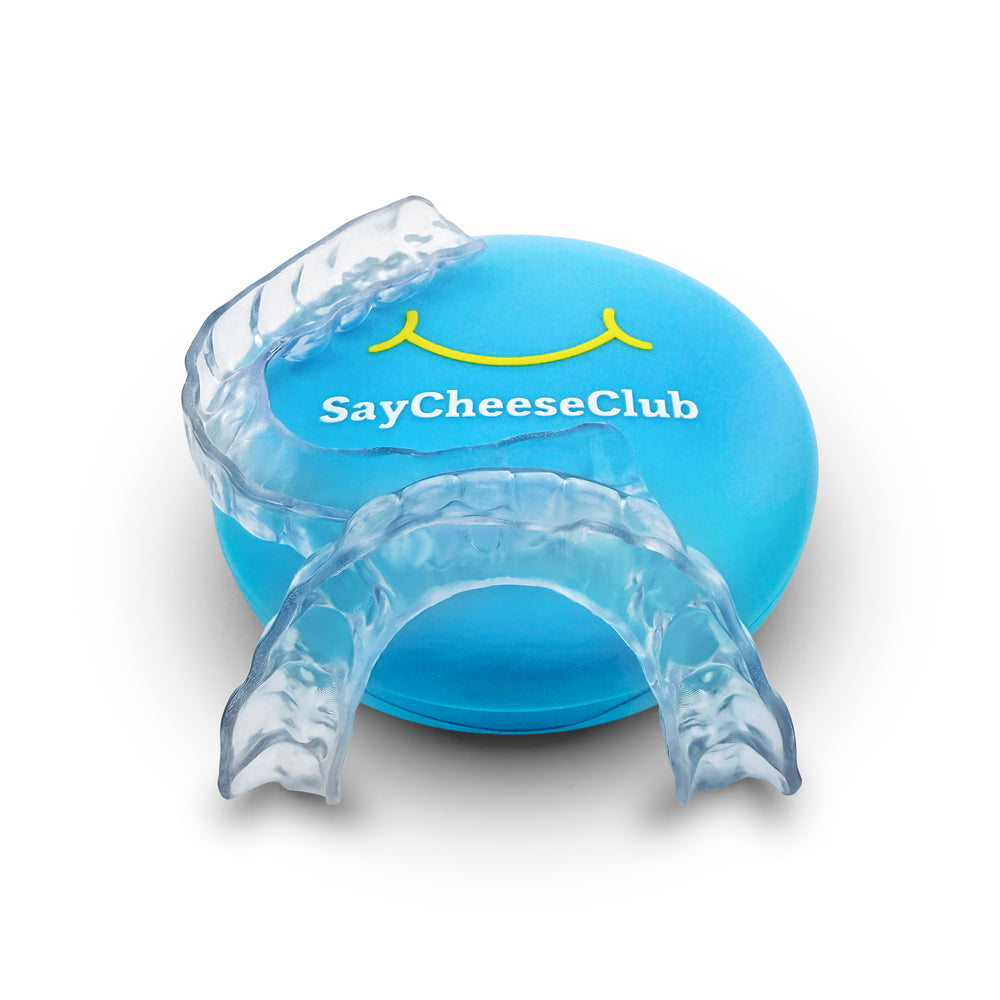
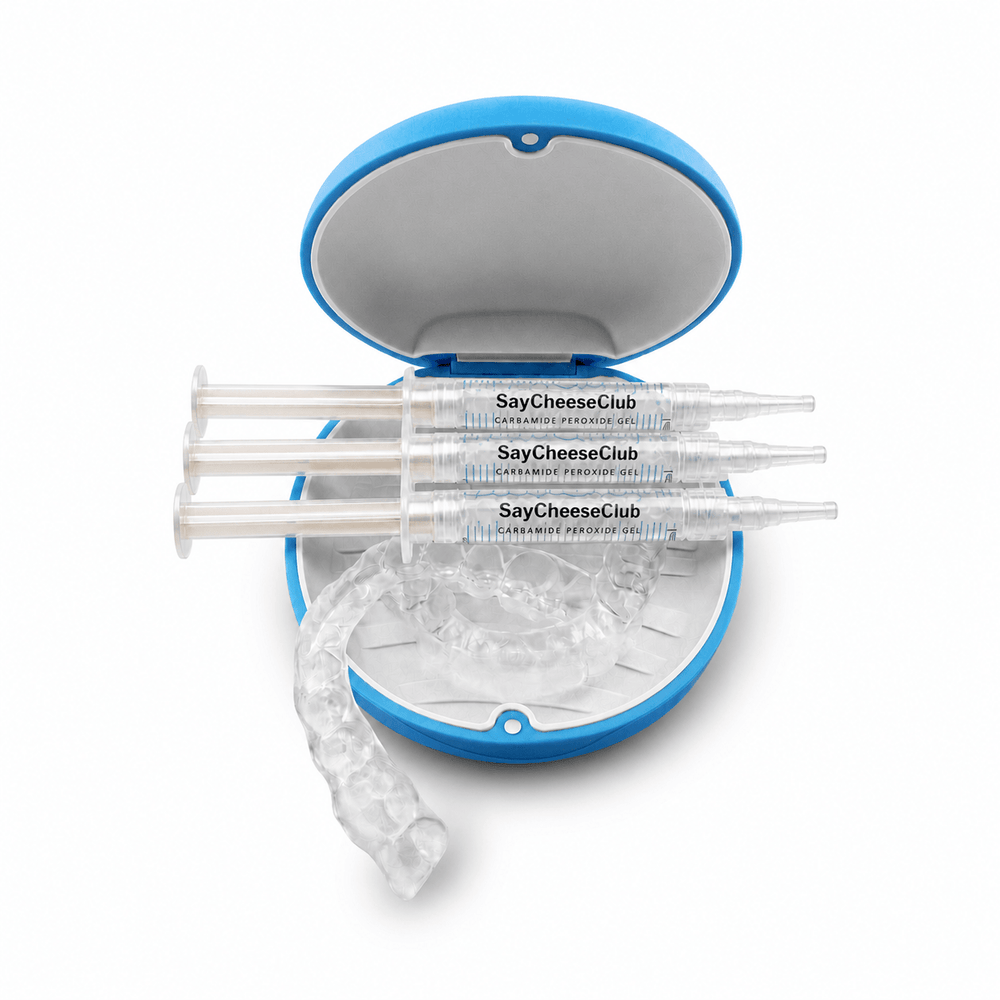
Ready for a clear retainer that actually fits? Get yours at SayCheeseClub Custom-molded to your exact smile, made in the USA, and up to 80% cheaper than the dentist.
Frequently Asked Questions
Can I use mouthwash to clean my clear retainer?
Better not to soak it in regular mouthwash. Most contain alcohol that can weaken and discolor the plastic. If you want that fresh feeling, a quick rinse with an alcohol-free rinse is fine, but it's not a substitute for actually cleaning it.
Can you whiten clear retainers?
You can lift staining and buildup with a vinegar or baking soda soak, but you can't truly whiten the plastic itself. If it stays discolored after a good clean, the retainer has simply run its course.
Do clear retainers smell?
Only when they aren't cleaned. The odor is trapped bacteria and moisture. A daily rinse-brush-dry plus a weekly soak keeps it from ever starting.
Can I eat or drink with my retainer in?
Stick to water. Take it out for everything else. Hot drinks warp it, and dark or sugary drinks stain it and trap bacteria right against your teeth.
The 30-Second Recap
- Daily: Rinse with lukewarm water, gently brush with dish soap (no toothpaste), air dry
- Weekly: Vinegar, baking soda, or tablet soak
- Avoid: Hot water, toothpaste, bleach, alcohol mouthwash, storing it wet
- Watch for: Cracks, cloudiness, odor, or a changed fit
- Replace it when the fit goes off or it won't come clean
Take care of your clear retainer and it'll keep your smile exactly where you left it.
And when it's time for a fresh set, skip the dentist markup. Get custom clear retainers at SayCheeseClub, molded to your smile and built to keep it that way.