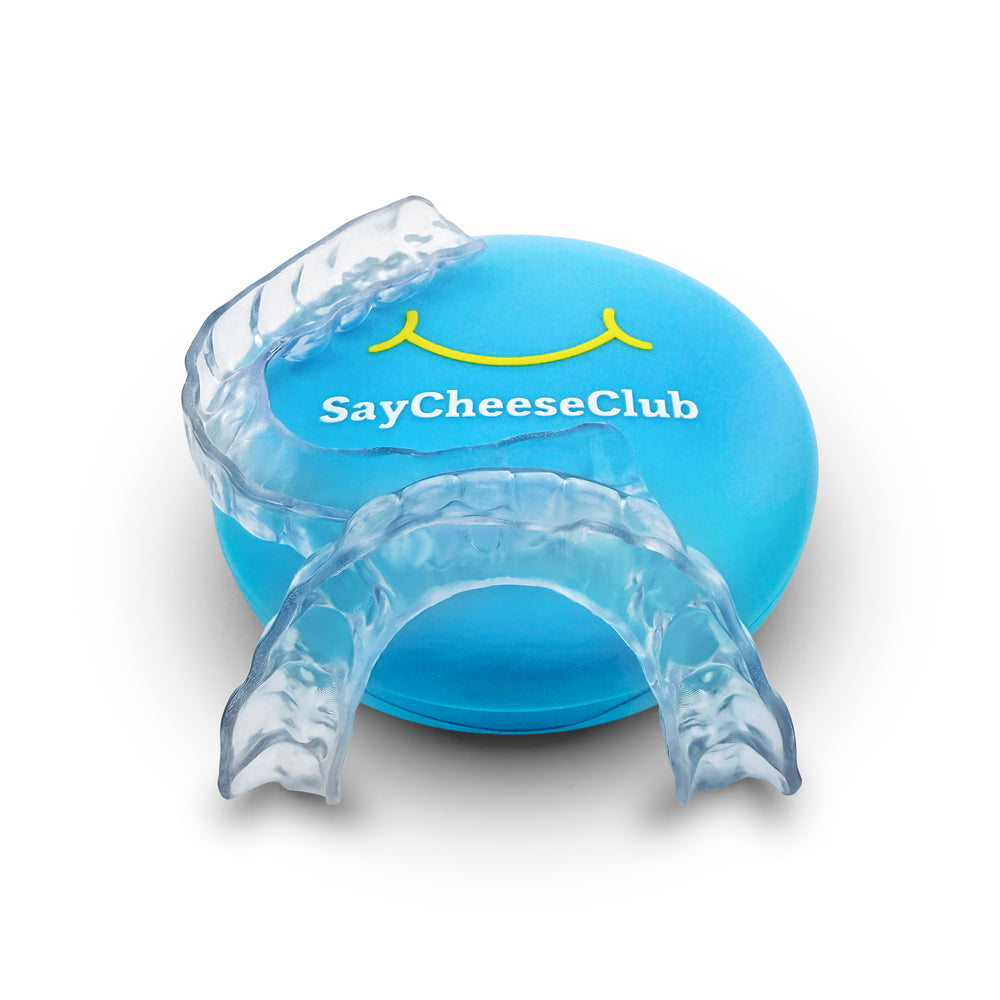
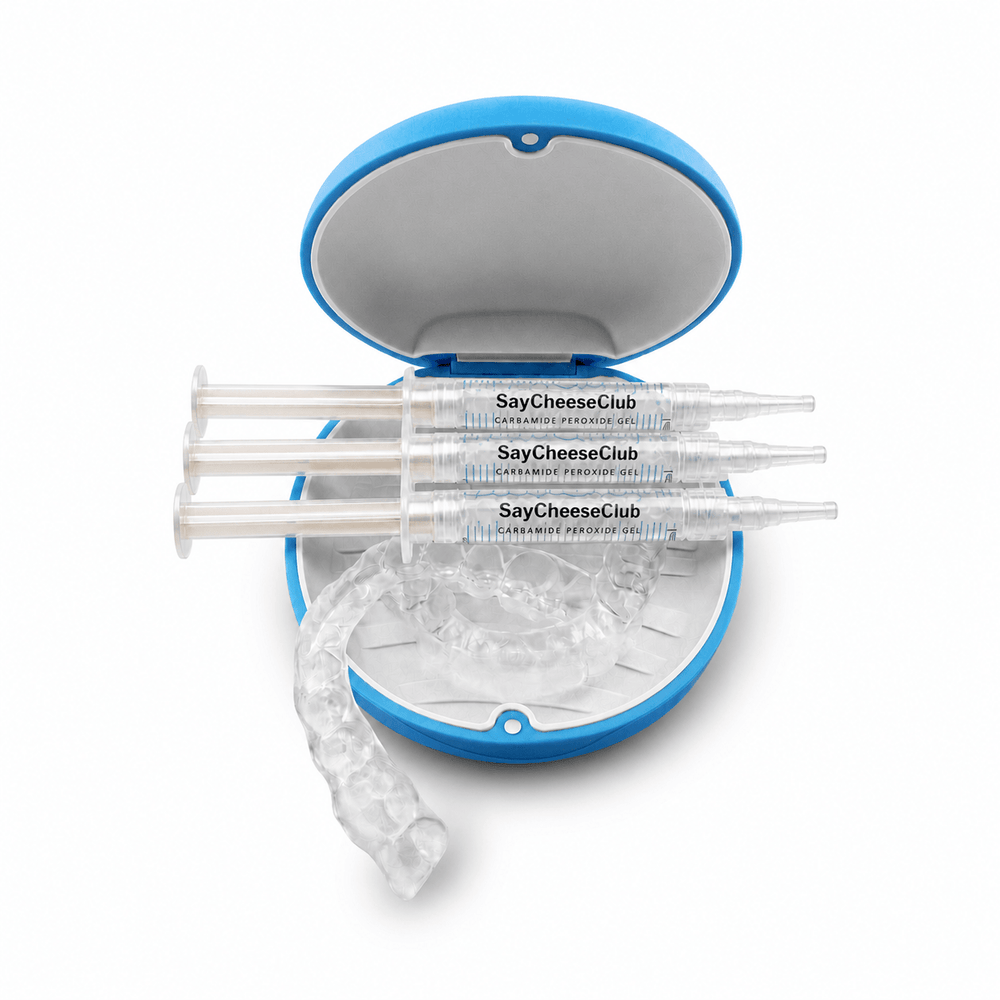
Anight guard looks like a clear, thin plastic tray shaped to fit over your upper or lower teeth, similar in appearance to a retainer or a clear aligner. Custom night guards are typically transparent and about 1 to 3mm thick, covering the full arch of teeth without covering the roof of your mouth. They are smoother and less bulky than sports mouthguards, which are thicker and often colored. Soft guards look slightly cloudy and flexible, hard guards look glossy and rigid, and hybrid guards look clear with a firm outer shell over a softer inner layer.
If you have never seen one up close, that description covers most of it. But there is more worth knowing before you buy, especially around thickness, how visible it is, and how to tell a night guard apart from the other clear trays people confuse it with.
What a night guard actually looks like, in detail
Picture a slim, transparent shell molded to the exact shape of your teeth. That is the basic idea.
- Shape. It follows the curve of your dental arch, in a horseshoe form. It covers the biting surfaces and sides of your teeth and stops at the gumline. Unlike some dental appliances, a standard night guard does not cover the roof of your mouth.
- Color. Custom night guards are almost always clear or slightly translucent. There is no need for color, since nobody is meant to see it.
- Coverage. A quality guard covers the full arch, meaning every tooth in the top or bottom row. Full coverage matters because partial guards can allow uncovered teeth to shift.
- Surface. The outside is smooth and polished. The inside carries an exact impression of your teeth, which is what holds it in place without clasps or wires.
The Cleveland Clinic notes that night guards are also referred to as occlusal guards, bite splints, or dental guards, so if your dentist uses one of those terms, they are describing the same appliance. You can read more about how they fit into treating grinding and jaw pain in their guide to mouthguards for jaw pain.
How thick is a night guard?
Thickness is where the differences become visible, and it depends on the type you choose. At SayCheeseClub, the options break down like this:
| Type | Thickness | What it looks and feels like |
|---|---|---|
| Hybrid | 2mm | Clear, with a hard outer shell over a softer inner layer. The most popular choice, balancing comfort and durability. |
| Soft | 2mm | Slightly cloudy and flexible, with a cushioned feel. Suited to lighter grinding. |
| Hard | 1.5mm | Slim, low-profile, and rigid with a glossy finish. Built for heavy grinding and strong clenching. |
Notice that the hard guard is the thinnest. That surprises people, but rigid material does not need extra bulk to resist force, which is why heavy grinders often end up with the slimmest-looking guard.
Is a night guard noticeable when you wear it?
Not really, and that is by design. A custom night guard is thin, clear, and molded precisely to your teeth, so it sits flush rather than bulging out. Someone would have to be looking closely to notice it.
This is one of the biggest visual differences between custom and drugstore guards. Boil-and-bite guards from a pharmacy are noticeably thicker and bulkier because they are made to fit a wide range of mouths rather than yours specifically. They tend to look and feel like a chunky piece of plastic, which is a common reason people stop wearing them.
Since a night guard is worn while you sleep, appearance matters less than fit. Still, a slimmer profile makes it easier to close your lips comfortably and to talk if you need to.
Night guard vs. retainer vs. sports mouthguard
These three get mixed up constantly because they are all clear plastic trays. Here is how to tell them apart at a glance.
- Night guard. Thin and clear, roughly 1 to 3mm, built to absorb sustained grinding pressure through the night. Fits over one arch.
- Retainer. The thinnest of the three, and noticeably flimsier. Designed to hold teeth in position, not to absorb force. A retainer will crack quickly if used for grinding.
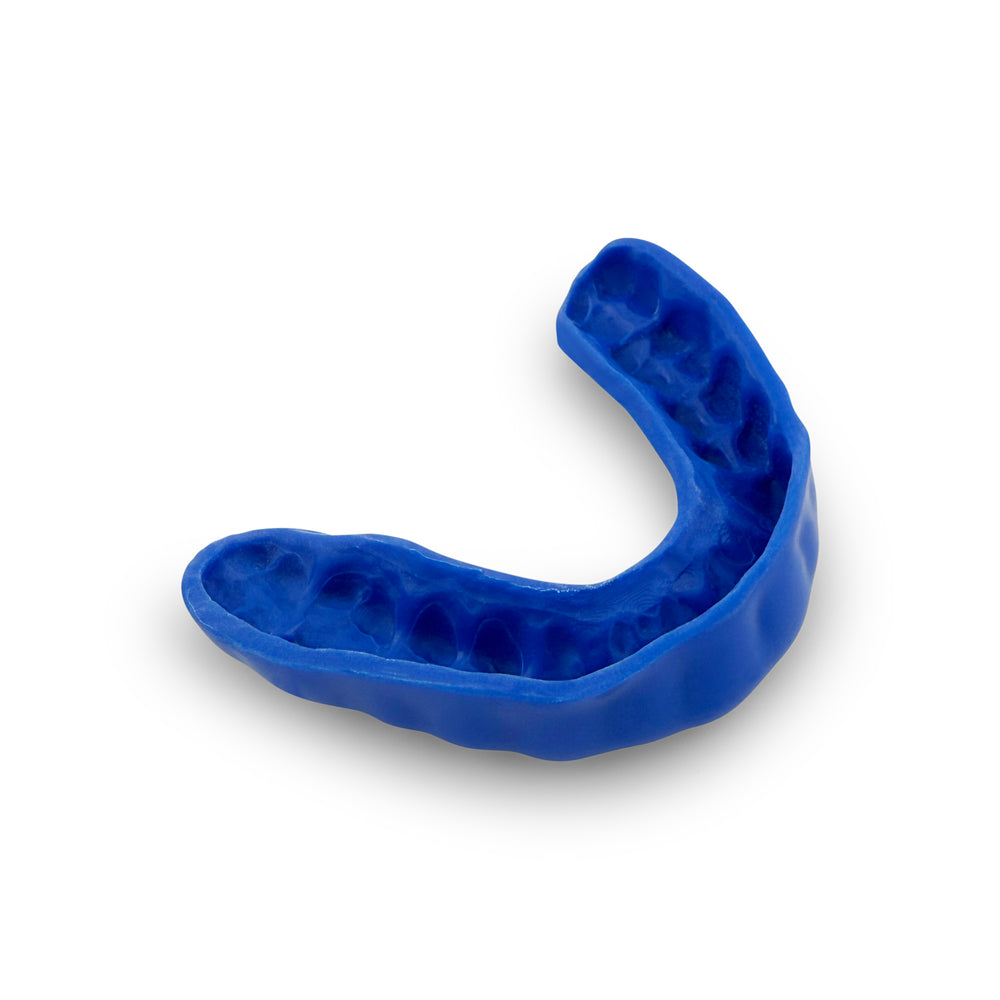
- Sports mouthguard. The thickest and bulkiest, frequently colored rather than clear. Built to absorb sudden impact, not hours of clenching.
They are not interchangeable. If you grind at night and play sports, you genuinely need two different appliances.
How do you know if it looks right on your teeth?
A properly fitted night guard should look and feel like a second skin over your teeth. Specifically:
- It seats fully, with no visible gaps between the guard and your teeth
- It stays in place without you holding it or biting down
- It covers every tooth on the arch, with no exposed molars at the back
- It does not press into or overlap your gums
If you notice rocking, gaps, or pressure on your gums, the fit is off and it is worth addressing before wearing it long term. And if you are still deciding whether you need one at all, our guide to the signs you may need a night guard walks through what to watch for.
Seeing one for yourself
The clearest way to understand what a night guard looks like is to see one made for your own teeth. Every SayCheeseClub night guard is molded from an impression you take at home, so it arrives clear, slim, and shaped precisely to your bite, in the thickness that matches how heavily you grind.
Shop Night Guards NowNight Guard Appearance FAQs
Are night guards clear or visible?
Custom night guards are typically clear or slightly translucent, and because they are thin and molded to your teeth, they are difficult to notice. Store-bought guards are usually bulkier and more visible.
Does a night guard go on the top or bottom teeth?
Either. Guards are made for the upper or lower arch depending on your grinding pattern and what suits your bite. Some people wear both, using an upper and lower set.
How thick is a night guard supposed to be?
Most fall between 1 and 3mm. Around 1.5mm is common for hard guards, while 2mm is typical for soft and hybrid styles. Heavier grinding generally calls for a more rigid material rather than a thicker one.
What is the difference between a night guard and a retainer?
A retainer holds teeth in their corrected position and is made from thin plastic that is not built to withstand grinding force. A night guard is thicker and made from tougher material designed to absorb clenching pressure. Using a retainer as a night guard will usually crack it.
Can people tell if you are wearing a night guard?
Rarely. A custom guard is thin, clear, and fits flush against your teeth, so it is not obvious. Since it is worn during sleep, most people never see it anyway.
What does a night guard feel like at first?
It feels noticeable for the first few nights, in the way a retainer does, and you may produce a little extra saliva at first. Most people adjust within a week, and a well-fitted custom guard should never feel painful or tight.
Do night guards cover the roof of your mouth?
Standard night guards do not. They follow the arch of your teeth and stop at the gumline, which keeps them comfortable and unobtrusive during sleep.
The bottom line
A night guard looks like a clear, slim, custom-shaped tray that hugs your teeth, closer in appearance to a retainer than to a bulky sports mouthguard. The type you choose affects the thickness and finish, but the goal is the same across all of them: a guard discreet and comfortable enough that wearing it every night is easy.
See what a custom night guard looks like on your teeth with SayCheeseClub clear, slim, full-coverage, and molded from an impression you take at home.