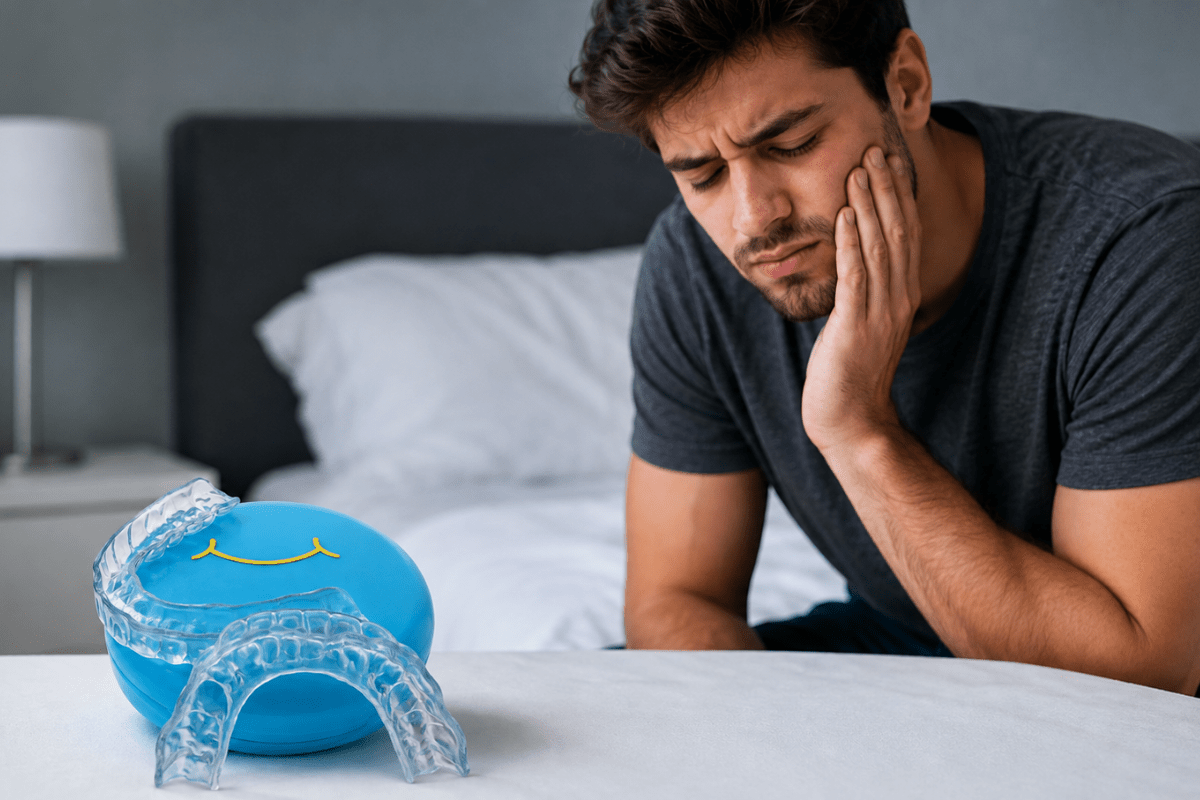
Maybe you catch yourself doing it at your desk, jaw locked tight while you're deep in an email. Or maybe you wake up and your face feels like you spent the night in a staring contest with your own teeth. Either way, you're clenching, and now you're wondering if a night guard will actually fix it.
Short answer: yes, it helps, but probably not in the way you're picturing. Let's get into what a night guard really does for clenching, so you know exactly what you're buying before you spend a dime.
First, clenching vs. grinding, are they the same thing?
Not quite, and the difference matters. Grinding is the sliding, back-and-forth motion (the sound your partner complains about). Clenching is the silent one: you're just holding your jaw shut with a ton of force, no movement, no noise. That's why so many clenchers have no clue they do it. There's nothing to hear.
Both put your teeth and jaw through the wringer, and the good news is a night guard helps with either.
So how does a night guard actually help?
Here's the honest breakdown of what it does when you clench:
- It protects your teeth from the damage. All that pressure wears down enamel and can chip or crack teeth over time. The guard takes the force instead, and it shields any fillings, crowns, or bridges too.
- It cushions the pressure. Instead of tooth grinding directly against the tooth, there's a buffer in between, which softens the impact of every clench.
- It eases the strain on your jaw. By keeping your teeth slightly apart and redistributing the force, a night guard takes some of the load off the jaw muscles and joints. That's why a lot of people notice less morning soreness, fewer tension headaches, and a jaw that doesn't feel wired shut when they wake up.
If you're brand new to all this and want the full rundown on how these things are made and fitted, our guide on what a night guard is covers it start to finish.
What a night guard won't do (real talk)
This is where honesty matters. A night guard is a shield, not a cure. It won't stop you from clenching in the first place, because clenching usually comes from something deeper, like stress, anxiety, caffeine, or your bite. So while the guard protects your teeth and takes pressure off your jaw, it's smart to work on the root cause too: managing stress, easing up on the late-day coffee, and checking in with your dentist if the pain is intense or constant.
Think of it this way: the guard handles the damage tonight while you work on the "why" over time.
Which night guard is best for clenchers?
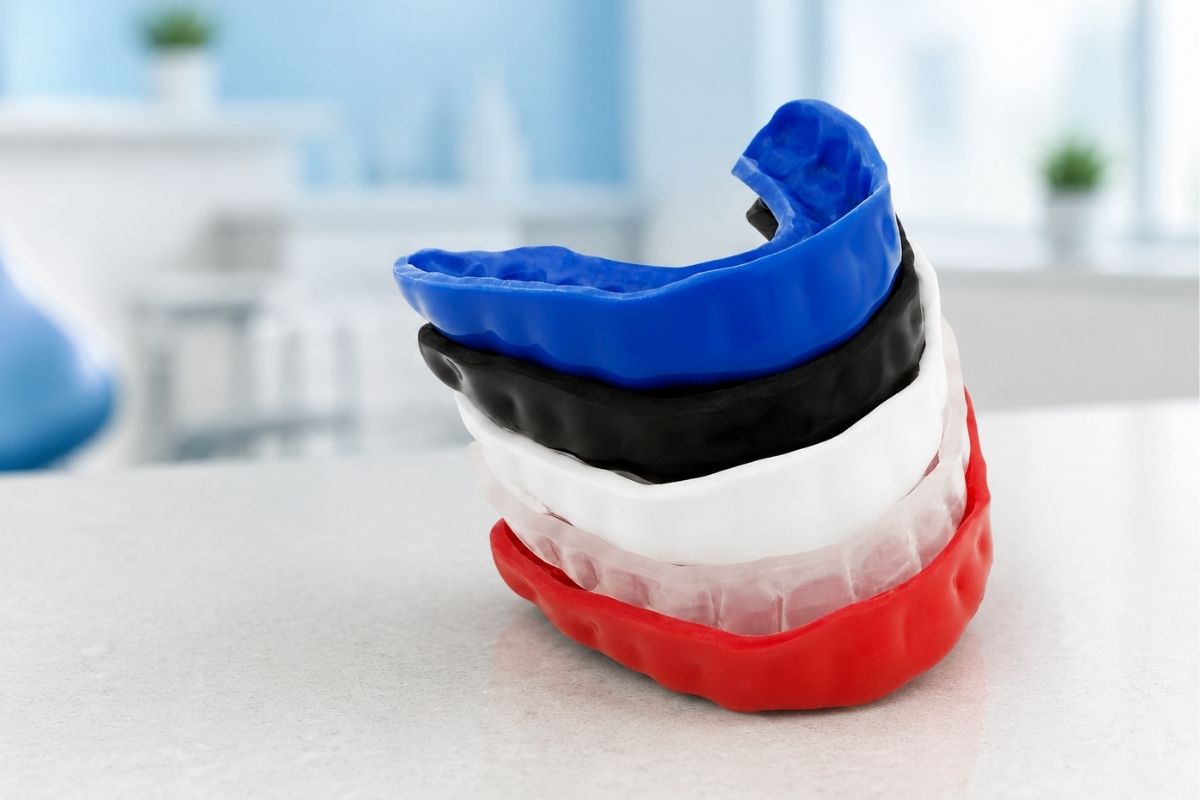
Not every guard is built for the same job. If you're a heavy clencher, a firmer, more durable guard tends to hold up better against all that sustained force, while a balanced hybrid style suits most people who want comfort plus solid protection. The key is a custom fit, because a guard that's bulky or slips around is a guard you'll quietly abandon by week two, and one you don't wear can't protect anything.
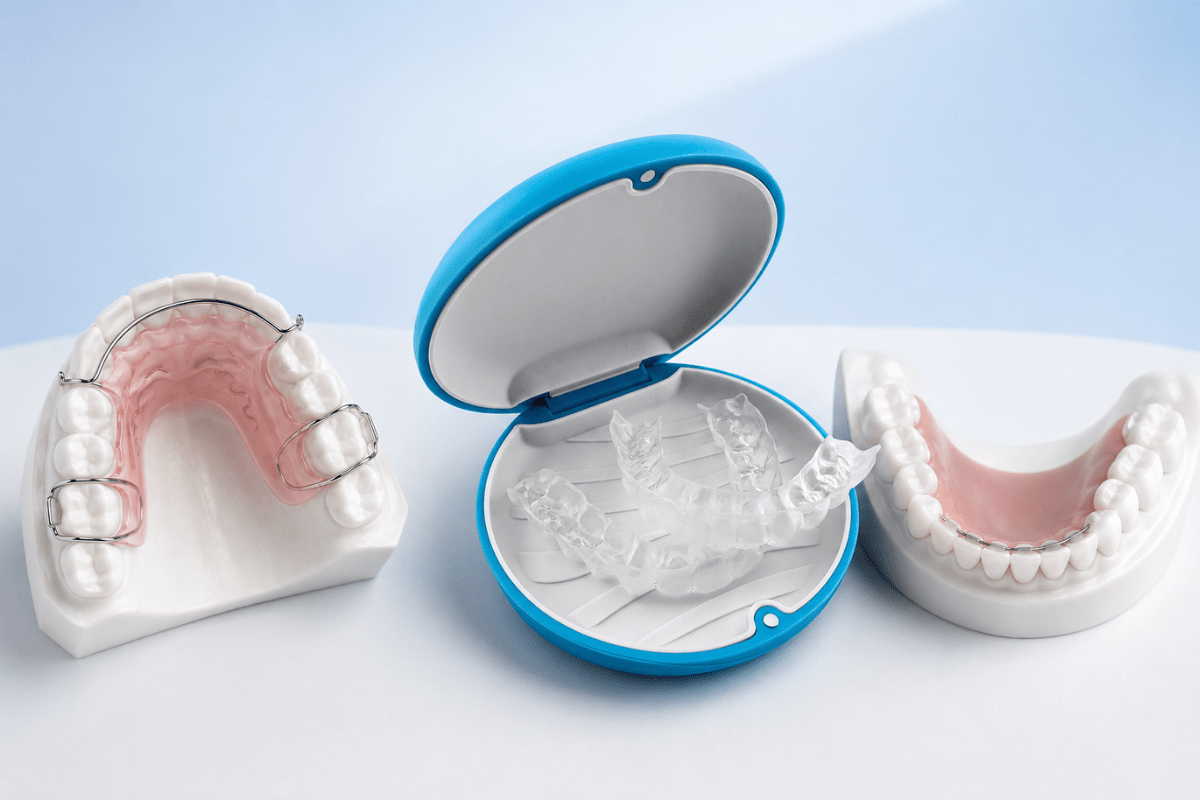
That's exactly why our custom night guards are molded to your exact teeth, so they're slim, comfortable, and actually stay put all night, whether you're a clencher, a grinder, or both.
Night Guard for Clenching FAQs
Will a night guard stop me from clenching?
Not directly. Clenching is usually driven by stress, your bite, or habit, so the guard doesn't switch it off. What it does is protect your teeth from the damage and take pressure off your jaw while you address the underlying cause.
Can a night guard help with jaw pain and TMJ from clenching?
For many people, yes. By keeping your teeth apart and cushioning the force, a night guard can ease jaw-muscle tension and reduce that sore, tight feeling in the morning. If your jaw pain is severe or ongoing, it's worth looping in your dentist as well.
What kind of night guard is best for clenching?
Heavy clenchers usually do best with a firmer, durable guard, while a hybrid style works well for most people wanting comfort and protection together. The most important factor is a custom fit, since that's what makes it comfortable enough to wear every night.
How do I know if I clench in my sleep?
Since it's silent, you look for the after-effects: a sore or tight jaw in the morning, frequent headaches, tooth sensitivity, or teeth that look worn. A dentist can also spot the signs during a checkup.
How soon will I feel a difference?
Many people feel more comfortable pretty quickly, since the guard immediately keeps teeth from pressing together. Jaw-muscle soreness often eases over the following days and weeks as the nightly strain lets up.
Can I wear a night guard during the day if I clench them too?
Some guards are suitable for daytime wear if you tend to clench while awake. A slimmer, low-profile custom guard is the most comfortable option for that.
The takeaway
Does a night guard help with clenching? Absolutely, as long as you know what you're getting: real protection for your teeth and real relief for your jaw, even if it isn't a magic switch that stops the clenching itself. Pair it with a little root-cause work, and your smile (and your mornings) will thank you.
Protect your smile with a custom SayCheeseClub night guard molded to your teeth, comfy enough to actually wear, shipped straight to your door.